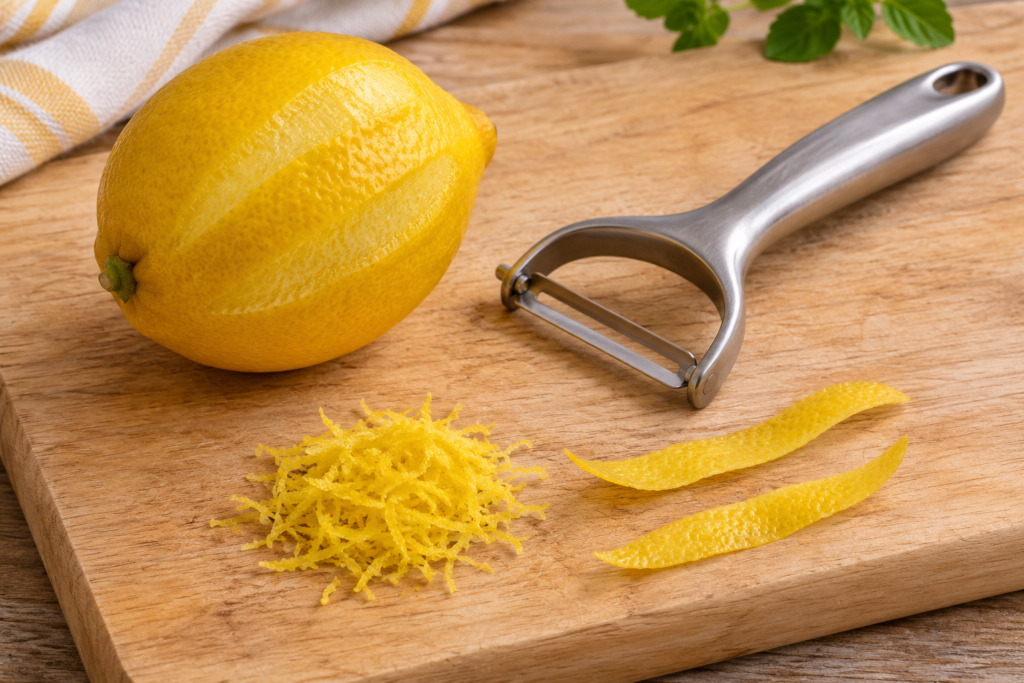
You can zest a lemon without a zester by removing thin strips of yellow peel with a vegetable peeler, then chopping them finely. A fine-sided box grater is another option if it catches the coloured skin without digging into the white layer below. The best choice depends on whether your recipe needs tiny pieces or broad strips.
For a yogurt sauce or a delicate cake batter, take the time to make the pieces small. For a recipe that asks you to steep a strip of peel and remove it later, the peeler has already done most of the work.
Kitchen note: this is a researched preparation guide, not a report of independent kitchen testing. Allow roughly 5–10 minutes for washing, peeling and chopping; that is a planning estimate.
Know which part to remove
Zest is the coloured outside of citrus peel. Beneath it sits the white pith, which can add bitterness. Purdue Extension’s knife-skills guide explains that the outer layer contains aromatic oils and can be removed with a peeler or knife.
You are shaving the surface, not peeling the lemon as you would an orange to eat. Once a patch turns white, move to a fresh yellow patch. There is no need to strip every last spot if you already have enough.
Wash and set up first
Use a fresh lemon without mould or rotten areas. Wash it under running water, rubbing the surface, then dry it so it is easier to hold. FDA produce-cleaning guidance recommends washing before peeling and using plain water rather than soap or produce wash.
Set a stable chopping board on the counter. You will need a vegetable peeler and a knife for the first method, or a fine grater for the second, plus a small dish to catch the zest. Keep fingers out of the blade’s path and stop if the fruit becomes awkward to grip.
If the recipe also needs juice, zest the whole lemon first. King Arthur Baking’s lemon guide also recommends taking the zest before cutting the fruit for juice.
Method one with a vegetable peeler
- Take a shallow strip. Hold the dry lemon securely and draw the peeler over a short section, directing the cutting action away from your fingers. Use light pressure; a wide, thick strip is not the goal.
- Check the underside. Look for obvious white pith. If there is a thick patch, lay the strip flat on the board and carefully trim it away with a knife, keeping fingertips clear. If it is too small to hold safely, discard that strip.
- Slice into narrow ribbons. Lay the cleaned yellow strips flat. Cut lengthways into thin slivers, working in a small pile you can control.
- Chop across. Turn the slivers and cut them into small pieces. Continue until there are no long, chewy ribbons, then scrape the zest into your dish.
Hand-chopped peel will not be as fluffy as rasp-grated zest. For a smooth sauce, chop especially finely and begin with a small amount. For baking, follow the recipe’s specified texture where precision matters.
Method two with a fine box grater
Stand the grater securely on a plate or board. Test a short, light stroke on its fine surface. If it produces small yellow flecks, continue gently, turning the lemon as each patch loses its colour. Stop well before your fingers approach the teeth.
If the grater takes large shreds, scrapes deeply or barely catches anything, switch to the peeler method. Graters vary; pressing harder is not a reliable fix. Tap the grater to release the zest and use a utensil to collect it from the safe side, never your fingertips against the cutting teeth.
Measure for the recipe you are making
Measure after chopping, since loose ribbons leave large gaps in a spoon. Fill the measuring spoon lightly rather than compressing the zest into a hard lump, unless the recipe specifically says otherwise. A lemon’s size and peel thickness vary, so do not assume every fruit gives the same amount.
For a savoury experiment, stir a small pinch into lemon yogurt sauce without garlic or white bean dip, then taste before adding more. These are optional flavour variations, not tested changes to those recipes.
Common questions
Can lemon juice replace zest
Not as a direct swap. Juice contributes liquid and acidity; zest contributes peel aroma and texture. Adding extra juice to compensate can thin a dressing or change a batter. Use a substitution supplied by the recipe author, or choose a recipe designed around juice.
What if white pith is already mixed in
Pick out large white pieces before using the zest. If the batch contains a lot of pith, make a fresh small batch rather than hoping extra sugar or salt will hide it.
Do I need to zest the whole lemon
No. Prepare the amount you need. Use the remaining lemon juice in a suitable dish, such as sautéed cabbage with garlic and lemon. Keep cut fruit covered in the fridge rather than leaving it out while planning another meal.
Featured image: AI-generated preparation illustration, not a photograph of a tested technique.