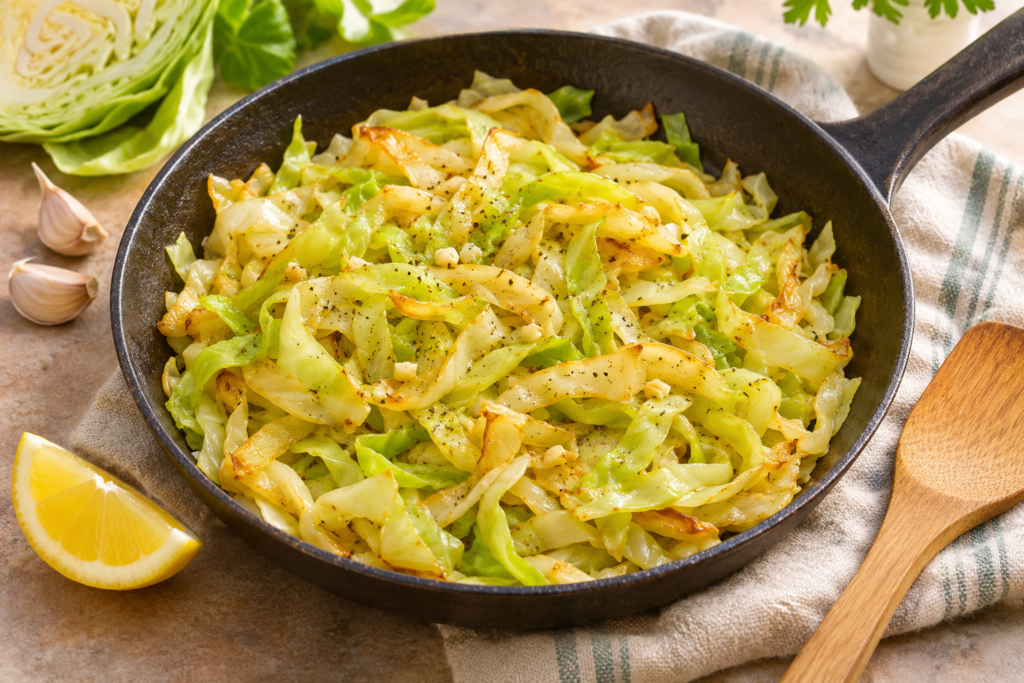
For sautéed cabbage with garlic and lemon, cook thin cabbage ribbons in a wide skillet until tender, add the garlic near the end, and finish with lemon off the heat. This order gives the cabbage time to soften without asking the finely chopped garlic to survive the whole cooking time.
A half-used cabbage can look like another job waiting in the fridge. Cut it into even strips and it becomes a straightforward side for rice, beans or a bowl of pasta. You need a little oil, a modest amount of seasoning and enough pan space to stir comfortably.
Recipe development note: This original recipe has not been independently kitchen-tested. All preparation times, cooking times and servings below are estimates. Use the texture checks alongside the clock.
Recipe at a glance
- Estimated yield: 3–4 small side servings
- Estimated preparation: 10 minutes
- Estimated cooking: 12–18 minutes, longer if cooked in batches
- Equipment: a wide 12-inch skillet, cutting board, knife and spatula
Ingredients
- 450 g (about 1 lb) green cabbage, weighed after removing the core and outer leaves
- 1 tablespoon olive oil
- 2 small garlic cloves, finely chopped
- ¼ teaspoon fine salt, then more only if needed
- ⅛ teaspoon ground black pepper
- 1 teaspoon lemon juice, plus more to taste
- ½ teaspoon finely grated lemon zest, optional
- 1 tablespoon water, only if the pan becomes dry before the cabbage softens
Use weight as your guide: “half a cabbage” can mean very different amounts. This batch is built around ordinary firm green cabbage. Softer or differently cut varieties need their own timing checks.
Prepare even, dry cabbage ribbons
Remove the outermost leaves, rinse the cabbage under running water and dry it with a clean towel. The FDA’s produce-cleaning guidance recommends plain water, not soap or produce wash. Use clean hands, a clean board and a clean knife.
Cut the cabbage into manageable wedges, remove the tough core and place a flat side on the board. Slice across each wedge into strips roughly 5 mm wide. Separate tightly packed ribbons with your fingers. Similar widths make the batch easier to cook evenly; finely shredded leaves and thick chunks will not soften at the same rate.
If you use ready-to-eat, prewashed shredded cabbage, follow its label. Check the bag’s ingredients: a coleslaw mix with carrots can be useful, but the texture will differ from plain cabbage.
How to make sautéed cabbage
- Warm the pan. Set the skillet over medium heat and add the oil. Let it warm without smoking.
- Add the cabbage and salt. Toss to coat. If the pan is too crowded to turn the leaves without spilling, cook two batches, dividing the oil and seasoning between them.
- Cook uncovered. Stir and turn the cabbage every minute or two. Allow brief contact with the pan between turns so some edges can colour. As it softens, spread it back across the pan rather than leaving it in a tall mound.
- Check the thicker ribbons. After roughly 10 minutes, taste a cooled piece. Keep cooking if the thicker part still feels tough. Lower the heat if the edges darken before the leaves soften. If the pan is dry and the cabbage is sticking, add the optional tablespoon of water and scrape gently, then let the liquid evaporate.
- Add garlic when nearly tender. Reduce the heat to medium-low, stir in the garlic and pepper, and cook for roughly 1–2 minutes, stirring. Stop before the garlic turns dark brown.
- Finish off the heat. Add 1 teaspoon lemon juice and the optional zest. Taste a cooled bite, then add extra lemon or salt in small amounts. Serve while warm.
The finished cabbage should bend easily and feel tender through the thicker parts, with a few golden edges if the pan allowed browning. It does not need to be crisp like a raw salad, or uniformly brown, to be ready.
Fix the problem you can see
The cabbage is watery
Keep the skillet uncovered and allow the liquid to evaporate before adding more oil. If the pile is deep, divide it between batches. A lid traps steam; extra oil cannot remove a puddle of water.
The edges burn while the middle stays tough
Lower the heat and check the cut size. Thick strips may need longer and a small splash of water. Very high heat is not a shortcut for uneven pieces.
The garlic tastes bitter
Dark, burnt garlic will not become mild again with lemon. Add garlic later next time and reduce the heat before it goes in. If you see a few burnt pieces early, remove them before tossing them through the cabbage; a badly burnt batch may need starting over.
It tastes flat or too sharp
For a flat batch, taste before choosing between a small pinch of salt and a few drops of lemon. For a sharply acidic batch, stop adding lemon. More plain cooked cabbage can dilute it if you have some; water alone mainly makes the side wetter.
Small variations that keep the method simple
For a warmer flavour, add a pinch of crushed chilli with the garlic. If you prefer no garlic, leave it out and finish with lemon zest and black pepper. You can use a small amount of butter for finishing, but it makes the dish unsuitable for someone avoiding dairy.
Red cabbage can be cooked in a skillet, but its texture and cooking time may differ. Napa cabbage is more delicate and can soften much sooner. Treat those as variations to watch closely, not identical timed swaps.
What to serve alongside
Serve the cabbage with pearl couscous and cooked beans for a simple bowl. A spoonful of white bean dip without tahini can sit alongside as a creamy contrast; keep its serving and storage instructions separate.
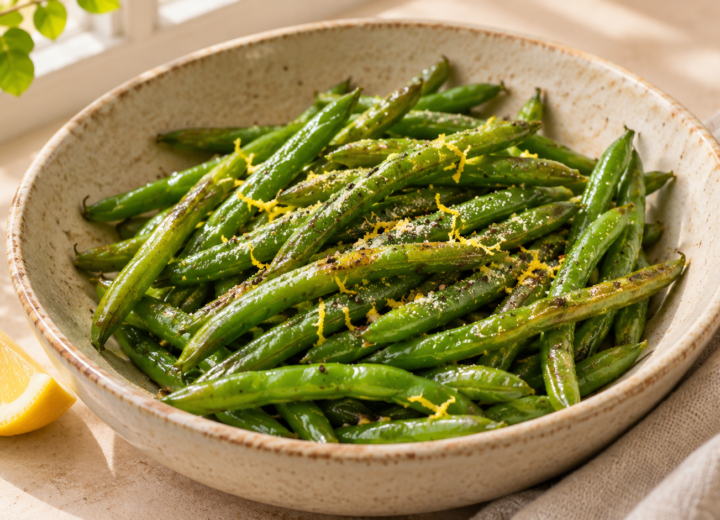
For another vegetable side on a different evening, try sautéed frozen green beans. Frozen beans need their package cooking instructions, so use that method rather than applying the fresh-cabbage timing.
Store and reheat leftovers safely
Refrigerate leftovers promptly in a shallow covered container at 40°F (4°C) or below and use within 3–4 days. Do not leave them out more than two hours, or one hour above 90°F (32°C). These limits follow USDA leftover guidance.
Reheat only the portion you need in a skillet with a small splash of water, stirring, or in a covered microwave-safe dish according to your appliance’s directions. Check several places with a food thermometer: USDA advises reheating leftovers to 165°F (74°C). Expect softer cabbage after reheating; add a little fresh lemon only after tasting.
Featured image: AI-generated serving illustration, not a photograph of a tested recipe.