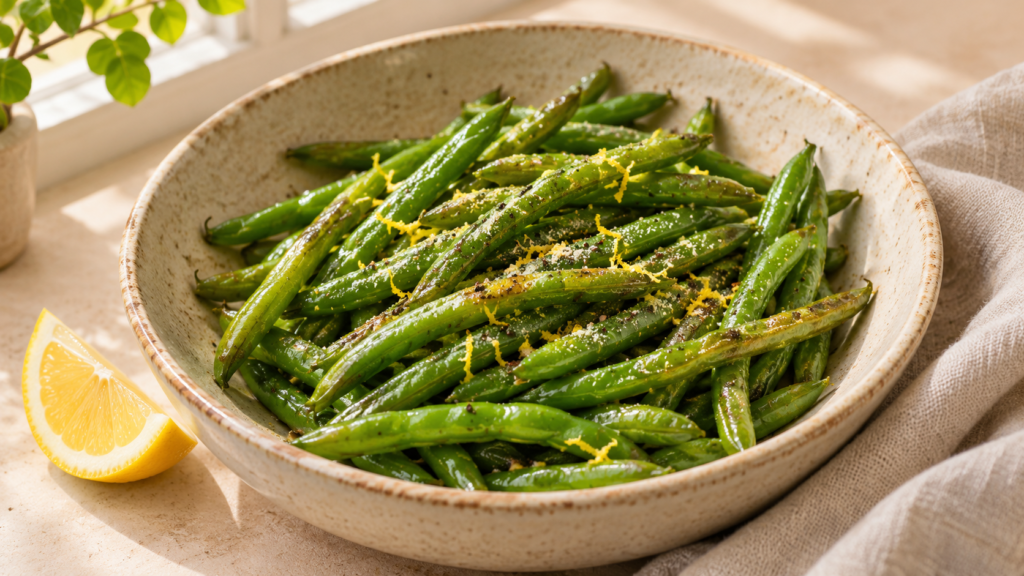
For sautéed frozen green beans, first cook the beans according to the packet, then let excess moisture evaporate in a wide skillet before adding garlic and lemon. This gives you more control over the finish than adding extra oil to a pan full of water.
A bag of green beans can make a simple side when the rest of dinner already needs your attention. Keep the seasoning light enough to adjust at the table: a little garlic, black pepper and lemon are plenty to start with.
Recipe development note: This recipe has not been independently kitchen-tested. The timings and yield below are estimates. Package instructions and thorough cooking take priority over the clock.
Recipe at a glance
- Estimated yield: 4 side servings
- Estimated preparation: 5 minutes
- Cooking: the packet’s full cooking time, plus roughly 4–8 minutes for the skillet finish
- Equipment: a wide skillet, spatula, food thermometer and any equipment required by the packet
Read the bag before starting so you can plan the total time. Whole beans, thin beans and cut beans do not necessarily cook at the same rate.
Ingredients
- 450 g (about 1 lb) plain frozen green beans
- 1 tablespoon olive oil
- 1/2 teaspoon garlic powder
- 1/4 teaspoon fine salt, then adjust to taste
- 1/8 teaspoon ground black pepper
- 1 teaspoon finely grated lemon zest, optional
- 2 teaspoons lemon juice, plus more to taste
- Water only as directed on the packet
Choose plain beans rather than a bag already coated in sauce. If the product is seasoned, reduce or omit the added salt. Garlic powder keeps preparation simple and avoids pieces of fresh garlic burning while the beans release moisture.
Cook the beans, then finish them in the skillet
- Follow the packet’s cooking method. Cook the frozen beans for the stated quantity, time and method, including any standing time. If it specifies steaming or microwaving, complete that step before moving to the skillet. Do not shorten it because the beans look bright green.
- Remove excess water. Drain cooked beans if necessary. Open steam bags away from your face and follow their handling instructions. Let visible steam escape briefly while you set up the pan; there is no need to leave the beans cooling on the counter.
- Dry the pan surface. Put the beans in a wide skillet over medium heat. Spread them out and stir gently until any pooled water evaporates. If the skillet is small, work in two batches rather than pile the beans deeply.
- Add oil and seasoning. Add the olive oil, garlic powder, salt and pepper. Toss gently and cook uncovered for approximately 3–5 minutes, stirring as needed. Lower the heat if the seasoning catches. The aim is a lightly sautéed surface; not every bean needs browned patches.
- Check that they are fully cooked. Follow any temperature requirement on the packet. University of Maine Extension recommends 165°F (74°C) for frozen vegetables. Use a food thermometer to check several places, not just the hottest part of the pan.
- Finish off the heat. Add lemon juice and optional zest. Taste a cooled bean, then adjust salt, pepper or lemon. Serve promptly.
The FDA explains why ready-to-cook frozen foods still need their full cooking instructions: freezing and partial cooking do not necessarily remove harmful bacteria. The temperature guidance above comes from University of Maine Cooperative Extension.
Do you need to thaw frozen green beans?
Usually, no. The National Center for Home Food Preservation advises cooking most frozen vegetables without thawing. For a purchased bag, its instructions are the deciding factor. This recipe does not require a separate thawing step when the label says to cook from frozen.
Cooking first and finishing in a skillet is also useful when the only validated instructions on the bag are for a microwave or saucepan. You still get garlic and lemon flavour without substituting an unverified skillet time for those directions.
Fix texture problems before adding more seasoning
The pan is watery: keep it uncovered and allow the liquid to evaporate. A crowded skillet takes longer. Extra oil will not make the water disappear.
The beans are soft: shorten the finishing stage once the required cooking is complete. Thin or French-cut beans may only need a brief toss with the seasoning. Further cooking cannot restore a crisp texture.
The seasoning tastes bitter: the heat may be too high or the garlic may have scorched. Reduce the heat promptly; if the pan has burnt residue, transfer the beans to a clean pan before continuing.
The flavour seems flat: taste after adding the lemon, then adjust salt in small pinches. Add more lemon a little at a time so it does not overwhelm the beans.
Adjust for the beans in your bag
Whole beans: spread them in a shallow layer so you can turn them without breaking them. Choose a skillet large enough that you can see some of the pan between the beans.
Cut or French-cut beans: stir gently and begin checking the texture as soon as the full package cooking is complete. Very thin pieces may only need a brief coating in the seasoned oil. The finishing estimate is not a minimum time you must reach.
Doubling the recipe: cook the frozen beans according to the packet guidance for the larger quantity, then finish them in batches. Doubling the oil and seasoning does not make one crowded skillet cook like two.
Variations and serving ideas
For gentle heat, add a pinch of chilli flakes with the garlic powder. For a buttery finish, stir in a small knob of butter off the heat. Keep olive oil as the only fat if you want the dish to remain dairy-free.
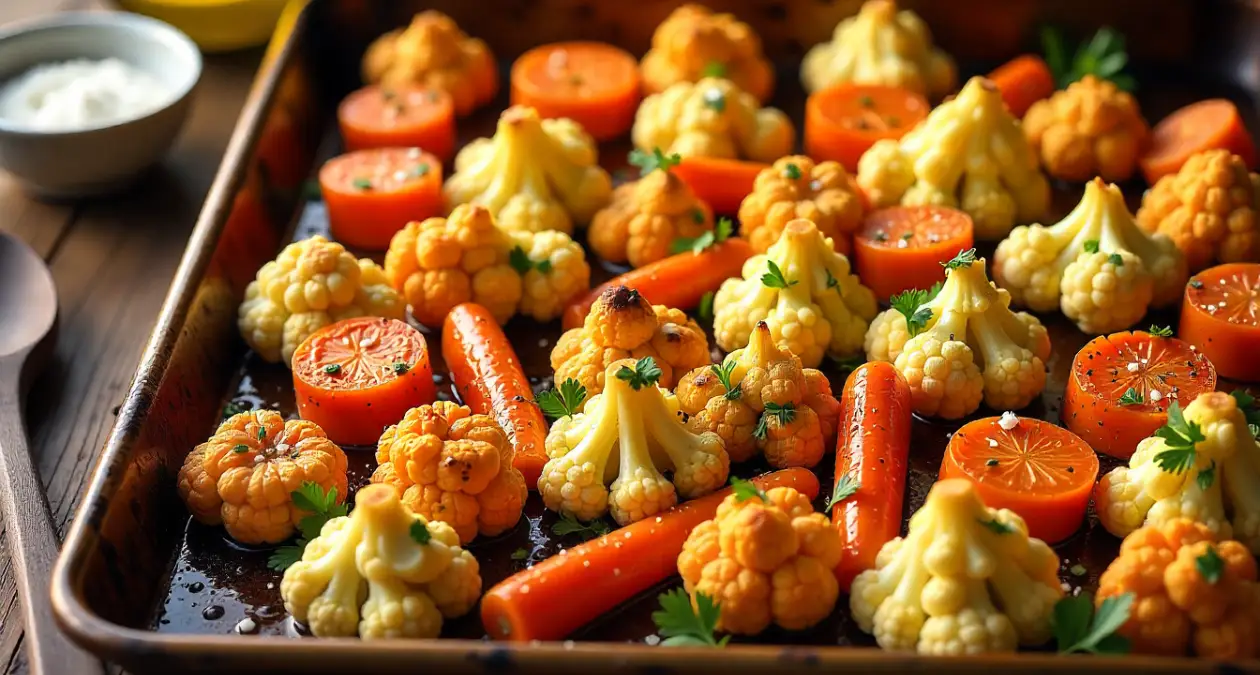
Serve the beans alongside rice, a cooked protein or a lentil dish. For a different vegetable side on another evening, browse Fnbbuzz’s roasted broccoli and carrots. If you prefer a dressing on the plate, offer a little lemon tahini dressing separately; it contains sesame, so check guests’ allergies first.
Storing and reheating leftovers
Put leftovers into shallow containers and refrigerate within two hours, or within one hour if the surroundings are above 90°F (32°C). Keep the refrigerator at 40°F (4°C) or below and use the beans within 3–4 days, following USDA leftover guidance.
Reheat only the portion you need. A covered skillet with a small splash of water can help warm the beans evenly; uncover afterwards if you want excess water to evaporate. University of Maine Extension advises reheating leftovers to 165°F (74°C). Expect softer beans after storage and reheating.
Can I use fresh beans instead?
Fresh beans need trimming and an appropriate cooking method of their own. They are not a direct timing swap for the frozen product in this recipe. Use a fresh-bean recipe rather than guessing from the skillet finishing time.
Featured image: AI-generated serving illustration, not a photograph of a tested recipe.