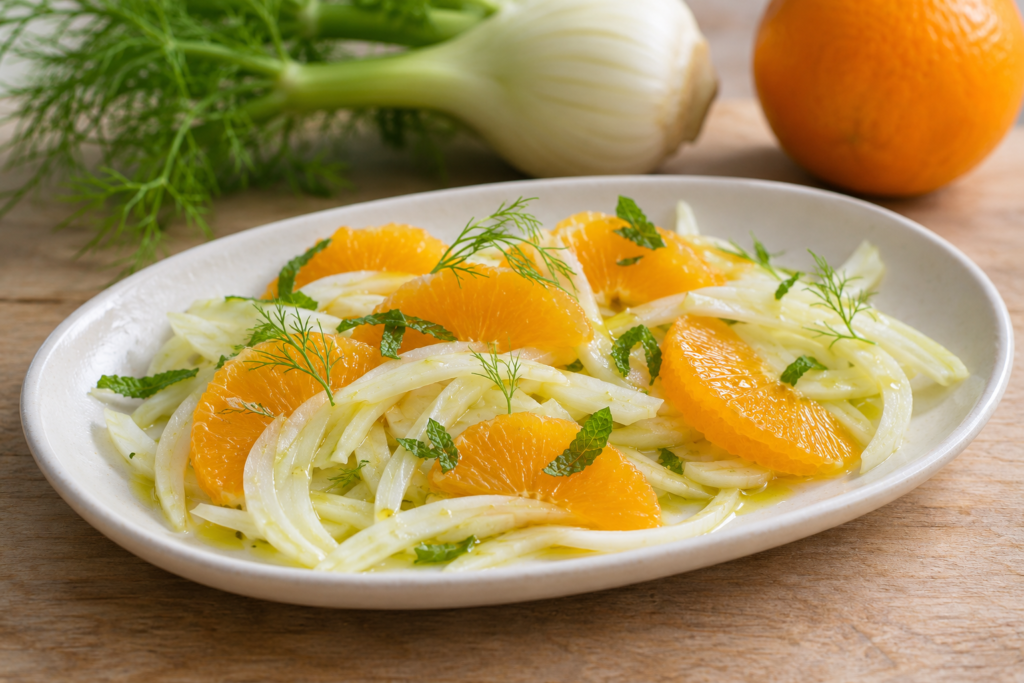
For an orange and fennel salad without onion, slice the fennel thinly, remove the orange peel and white pith, and dress the two lightly with orange juice and olive oil. Add a little mint at the end. The result should be crisp and juicy, with enough dressing to coat the slices rather than collect underneath them.
This small salad suits a meal that already has something warm and savoury on the table. You do not need a mandoline or a long ingredient list. A sharp knife, a steady board and a few extra moments spent on the fennel will do more for the texture than a complicated dressing.
Recipe development note: this formulation has not been independently kitchen-tested. The preparation time and serving yield are estimates.
Ingredients for two side portions
- 150 g fennel bulb after trimming, roughly half a medium bulb
- 1 large sweet orange
- 2 teaspoons extra-virgin olive oil
- 1 tablespoon orange juice, collected while cutting the fruit or squeezed from an extra orange
- 1 teaspoon lemon juice, optional, added only after tasting
- 4–6 small mint leaves, finely torn
- A small pinch of salt, optional
- Black pepper to taste
- A few tender fennel fronds, optional
Estimated time: 15–20 minutes, with no cooking. Have a mixing bowl, small dressing bowl, sharp knife and stable cutting board ready.
Use the pale fennel bulb for the main salad. The firm stalks are not a like-for-like replacement for those thin bulb slices. The fronds are the feathery green tips; add only a small amount as a garnish.
Wash first, including the orange
Wash your hands and work with clean utensils. Rinse the fennel and orange under running water before trimming or peeling, then dry them. FDA produce guidance advises washing before peeling so a knife does not carry surface dirt onto the flesh; soap and produce wash are unnecessary. Rinse and dry the mint too.
Slice the fennel so it is pleasant to eat raw
Trim off the stalks and a thin slice from the base. Remove damaged or tough outer layers. Halve the bulb lengthwise, place a half flat-side down, and cut out the firm core. Slice across it as thinly and evenly as you comfortably can.
Try a slice before continuing. If it feels like a thick, woody wedge, make the next slices thinner and check whether any tough core remains. Fennel should supply crunch, but the pieces should be easy to bite through alongside the orange.
A knife is enough for this small quantity. If you prefer a mandoline, use its guard and follow its safety instructions; do not push the last small piece through with bare fingers.
Prepare the orange and keep the juice
Cut a thin slice from each end so the orange stands steadily. Working down its curve, remove the peel and the white pith with a knife. Trim away remaining thick patches of pith. Cut into thin rounds, remove seeds and halve the rounds for easier eating. Catch any juice in a bowl.
Use one measured tablespoon of that juice in the dressing. If the cutting board gives you less, squeeze some from an extra orange. Keep surplus juice separate: pouring everything over the salad makes the final amount depend on how juicy that particular fruit happens to be.
Dress lightly and assemble
- Whisk the measured orange juice with the olive oil, optional salt and pepper.
- Toss the fennel with about half the dressing. Spread it on two plates or a small platter.
- Arrange the orange pieces over the fennel. Spoon on more dressing only if needed.
- Add the torn mint and optional fronds. Taste a bite containing both fennel and orange before deciding whether to add the lemon juice.
The orange-and-fennel pairing and separate-component preparation are informed by UC Berkeley’s fennel and orange salad. This smaller formulation omits its leafy-green base, uses a lighter amount of oil and adds mint; it is not the university’s original recipe.
Adjust the bowl you actually have
Too sharp: leave out the optional lemon. A tart orange needs a different finish from a sweet one. If available, add a few pieces of sweeter orange rather than repeatedly increasing the oil.
Too much anise flavour: use less fennel and more orange next time. Raw fennel has a distinctive flavour; onion-free does not mean flavour-free.
Liquid pooling on the plate: lift the salad with tongs or a slotted spoon into a clean serving dish. Check that washed ingredients were dried, and reserve some dressing rather than automatically using it all.
Bitter bites: check for thick white orange pith. Removing it before slicing is easier than picking it out of a dressed salad.
Serving and preparing ahead
Serve alongside garlic and parsley mushrooms, or pair it with a bowl of pearl couscous. These are serving suggestions, not independently tested meal combinations.
For advance preparation, keep the cut fennel, orange and dressing in separate covered containers in the refrigerator, then assemble near serving. Add mint last. Plan to make and eat this small batch the same day for its crisp texture; that is a quality recommendation, not a validated shelf-life claim.
USDA advises refrigerating fresh-cut salad and fruit immediately. Keep the components and any remaining salad at 40°F (4°C) or below, following FDA produce-storage guidance. Citrus dressing does not replace refrigeration.
Featured image: AI-generated serving illustration, not a photograph of a tested recipe.