Enjoy Homemade Thai Basil Noodles At Home In Minutes
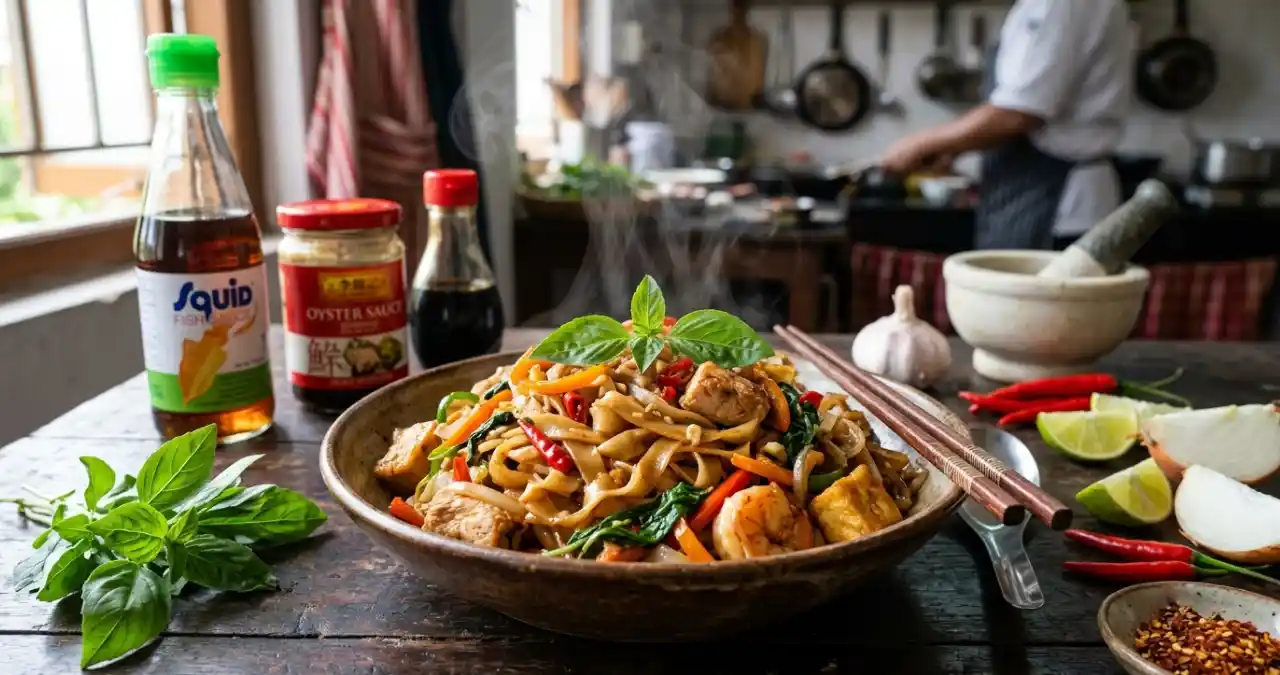
As a child, I always had a craze for noodles, whether at home or in school. My mother used to make me different types of noodles that tasted hot, tangy, sweet, and creamy. Later, I came to know that my mother used to make Thai Basil Noodles, which are far different from the regular ones.
In this recipe, basil is the main ingredient that gives it a classic touch and makes it more tasty. Now you may ask me, if basil is used as a topping, then how does it work as the main ingredient? Let’s check the hidden secret in today’s recipe.
Table of Contents
Quick Recipe Intro
| Recipe | Thai Basil Noodles |
| Cuisine | Thailand |
| Prep Time | 7 minutes |
| Cooking Time | 10 minutes |
| Total Time | 17 minutes |
| Difficulty | Easy |
| Calories | 450 |
| Serving | 4 |
What Is The Secret Of Thai Basil Noodles?
Before we switch on the stove, a sec, let’s just talk about the star ingredient, basil, ok.
- Holy Basil (Bai Krapow): this one is the traditional choice. It has this peppery, clove- like bite that kind of stands out. If you have an Asian grocery store near you, go grab it there!
- Thai Sweet Basil (Bai Horapa): really solid and honestly a lot easier to find. It gives off a clear anise, or like licorice sort of note.
- Italian Sweet Basil: if you can’t locate the other two, then regular grocery store basil will still get you a great noodle bowl. Just expect the flavor character to shift a bit; no big problem.
Ingredients You’ll Need
The sauce
- 2tbsp Oyster sauce
- 1.5tbsp light soya sauce
- 1tbsp dark soya sauce
- 1tsp fish sauce
- 1tbsp brown sugar
- 2tbsp water
The Stir Fry
- Wide noodles (regular or 225g flat rice based on serving)
- 3tbsp neutral oil
- 3-4 garlic cloves, minced
- 1-3 Thai bird’s eye chillies, chopped finely
- ½ medium onion, sliced
- 1 bell pepper (any colour), sliced
- Chicken Breast, shrimps, tofu (optional)
The Secret Instruction
Part 1: Prepare the sauce and noodles
First, take a boiler and add water, a pinch of salt, and a little bit of oil (to avoid stickiness), and put it on the heat. Once the water comes to a boil, add the rice noodles into it and cook for 2-3 minutes. Remember, do not soften the noodles, or they will become sticky. They will cook when it is tossed with the veggies.
While the noodles are cooking, take a small bowl and whisk the oyster sauce, light soya sauce, brown sugar, fish sauce, and water together. Save the mixture for later use.
Part 2: Sauté The Aromats
Take a large hot skillet and put it on. Add a little oil and heat. Now, add the minced garlic and chopped chillies into the pan. Stir-fry for about 30 seconds until the raw flavour of the cloves fades.
Part 3: Cook The Veggies And Protein
Add your favourite veggies, onions, bell pepper, and protein (optional) into the pan and toss them for about 3-4 minutes. Do not overcook the bell pepper; let it be crunchy.
Part 4: Toss And Finish
Lower the heat and add the cooked noodles and sauce over the noodles and toss well so that it spreads evenly. Make sure the whole noodles and veggies are absorbed evenly.
Part 5: Serve It Fast
Now, turn off the heat and add handfuls of basil into the pan. Toss the whole thing evenly for 30 seconds before serving. It will help the noodles to absorb the flavour.
Pro Tips for success
💡 Get everything ready first: stir-frying goes really fast. So mix your sauce already, chop the veggies, and cook the noodles before you even turn on the stove. This is that mise en place thing, and it’ll totally keep you from accidentally burning your garlic, or you know, getting distracted for a second.
🥢 Don’t crowd the pan: if you’re doubling this recipe, cook it in two separate batches. When the pan is too packed, the ingredients start steaming instead of getting that sear, and then you end up with kinda soggy noodles, not the nice texture you want.
Flavor Adjustments & Substitutions
If you want it…, make this adjustment.
- More Spicy 🌶️: “Smash the Thai chilies first, before chopping, to release those seeds. Or just add a teaspoon of chili flakes,” and keep going.
- Vegetarian 🌿: Swap the oyster sauce for a vegetarian stir-fry sauce (mushroom-based) and use a vegan fish sauce or extra soy sauce. Use tofu or mushrooms for protein.
- Gluten-Free 🌾: Make sure your soy sauces and oyster sauce are certified gluten-free; tamari works great! Rice noodles are naturally gluten-free.
Serving suggestion
These tangy, sweet, spicy noodles own many hearts globally, and the fragrance of basil leaves makes people more engaging towards it. If you want to make it a little creamy and delicious, you can add some mozzarella cheese for a creamy texture or protein like chicken or mushroom slices. You can also have some pickles or cucumber, baby tomatoes glazed with a dash of olive oil to enhance the taste.
Additional Note: In an authentic Thai recipe, there is no use of cheese or any dairy product. Adding them into the dish is completely optional, or your choice.
Nutrition Breakdown
- Protein-28g
- Carbohydrate-55g
- Fat-12g
- Fibre-2.5g
- sugar-6g
Natural Blunders To Avoid
- Avoid fully softening the noodles
- Avoid cooking the basil leaves
- Avoid adding extra sugar
- Do not overcook the garlic
- Do not overcrowd the pan
- Avoid skipping the fresh chillis
Conclusion
A healthy and tasty dish is a secret of happiness. It becomes more classic and special when you follow a recipe that is popular and easy to make in your kitchen. These Thai Basil Noodles can be a great change for every noodles lover, and they will taste something new. The fresh basil fragrance and the aroma of chili and fish oil combine to make a brilliant taste buster, so try this authentic Thai recipe today!
FAQs
Can I use whole grain noodles instead of rice noodles?
You can absolutely use whole grain noodles instead of rice noodles! While rice noodles are traditional for Thai stir-fries, whole wheat or whole grain noodles work surprisingly well and give the dish a rustic, hearty twist.
What is the best way to cook the noodles to avoid extra softness?
The best way to cook the noodles is to boil the noodles for 2-3 minutes and then transfer the noodles immediately into ice water. The ice water stops extra cooking so that it doesn’t get softer.
What is the famous food of Thailand?
Thailand is world-famous for its vibrant, aromatic, and beautifully balanced cuisine that perfectly hits five key flavors: sweet, salty, sour, bitter, and spicy. While Pad Thai and Tom Yum Soup are the most famous snacks and starters globally, Thai culinary culture revolves around a few heavy-hitting, comforting main dishes usually served family-style with plenty of steamed jasmine rice.
What is the main cuisine of Thailand?
Thai cuisine is a masterclass in balance, defined by the harmonious blend of five core flavors: sweet, salty, sour, bitter, and spicy. Relying heavily on fresh herbs like lemongrass, galangal, and holy basil, it features aromatic curries, stir-fried noodles, and vibrant salads, almost always anchored by fragrant jasmine rice.
When did Thai Noodles start becoming popular in India?
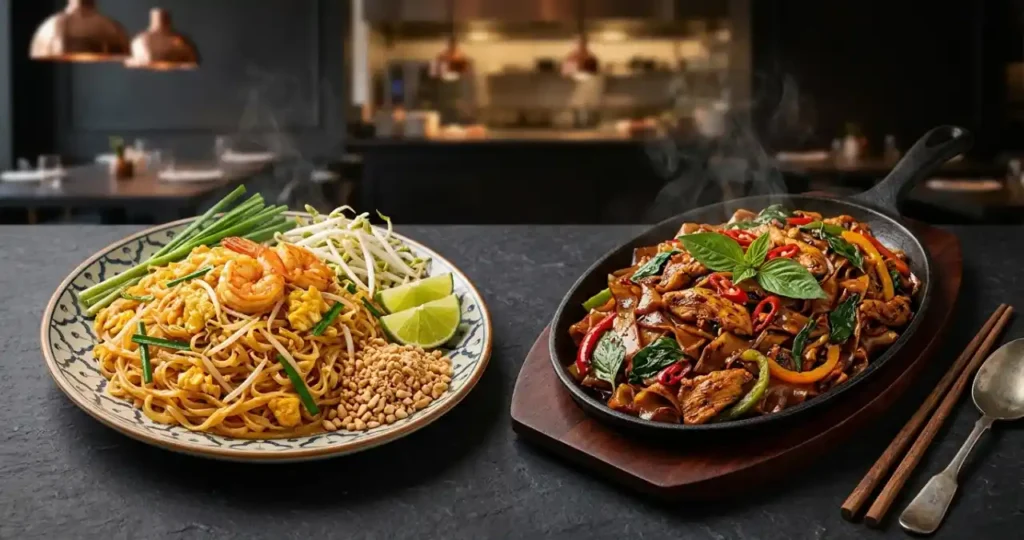
Thai noodles, specifically dishes like Pad Thai, Pad See Ew, and Drunken Noodles, began their journey into mainstream popularity in India during the mid-to-late 2000s and early 2010s.
What is tofu?
Tofu (also known as bean curd) is a popular, nutrient-dense food made from soy milk.
Can I use butter instead of oil in Thai noodles?
You can use butter, but it is highly recommended to stick with oil for Thai noodles.
Are Thai basil noodles best for kids?
Thai basil noodles can be a hit with kids, but as written, the traditional recipe is usually too intense for them. To make them truly kid-friendly, you just need to make a few quick tweaks to the heat, texture, and sodium levels.

Related Posts
Beautiful collection of fine jewelry. I especially love how modern designs can be combined with timeless craftsmanship. For anyone looking for lab-grown diamond jewelry, Pure Star Diamonds offers a wide selection of rings, bracelets, earrings, necklaces, and other elegant pieces for weddings, anniversaries, and everyday wear. Their collection is definitely worth exploring. https://www.etsy.com/shop/PureStarDiamonds
I came across Reddy anna book club while searching online and found Reddy Anna Officialss worth checking out. More information: https://reddyannaofficialss.com/