Pad Thai vs Drunken Noodles: The Ultimate Thai Takeout Showdown
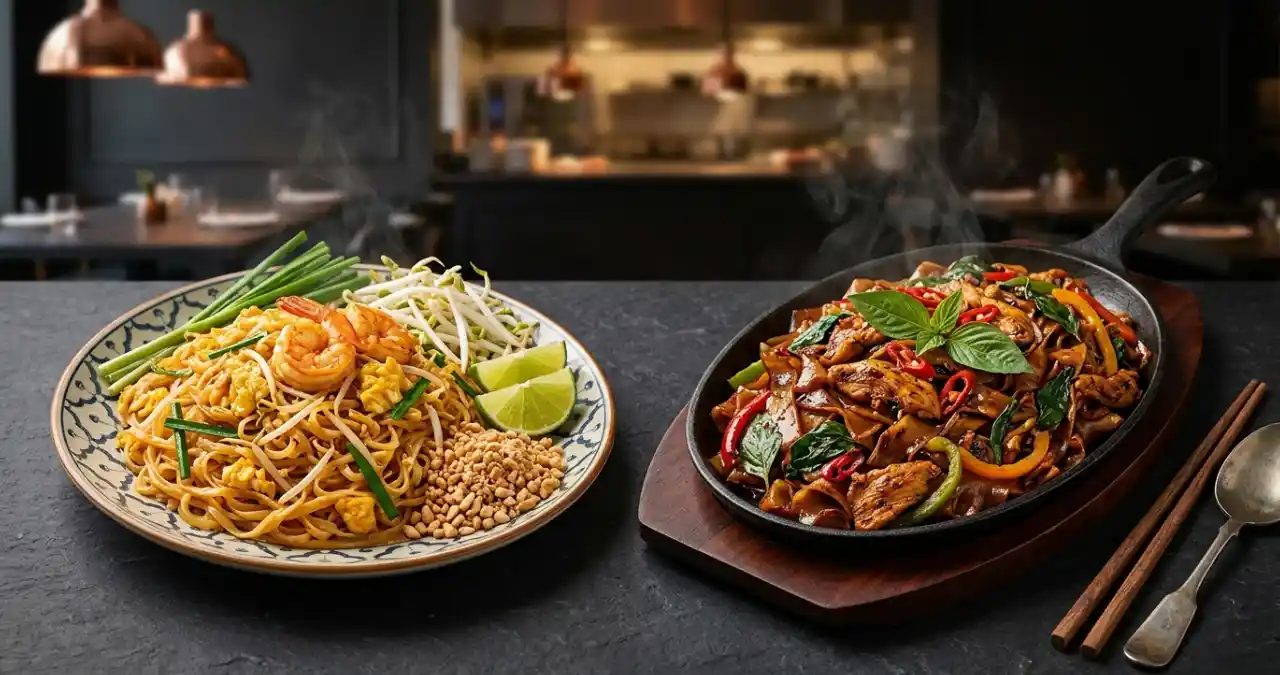
If you are a noodles lover, then a noodles platter is the ultimate solution to your hunger. Now, when you are scrolling through the food app, you suddenly notice the Pad Thai and drunken noodles options. Which one will you order? If you are confused between the two authentic and signature Thai dishes, then check out the Pad Thai vs drunken noodles article to choose the best as per your taste.
Remember, they both feature rice noodles and a wok-hei-charred finish; they could not be more different in flavor profile, texture, and history. Let’s break down the differences so you know exactly what to order for your next Thai food craving.
Table of Contents
Difference Between Two Classic Thai Noodles
1. The Core Flavor Profiles
The major difference is the magical sauce that contrasts with the two classic noodle dishes, pad Thai and drunken noodles.
Pad Thai: Sweet, Tangy, and Nutty
Pad Thai is kinda like this masterclass in balancing three core flavor ideas: sweet, sour, and salty. The real trick is tamarind paste, for sure. A decent Pad Thai sauce leans hard on the fruity, tangy tartness of the tamarind, then it’s softened by that warm sweetness from palm sugar, and it gets its savory backbone from fish sauce, that umami thing.
When it finally hits your tongue, it feels bright, but also comforting. There’s usually no real heat baked into the base dish, though they often set out some dried chili flakes on the side, so you can tune it yourself. And then adding crushed peanuts at the end gives this separate nutty finish, sort of like a last little flourish.
Drunken Noodles: Savory, Fiery, and Herbaceous
Drunken Noodles kind of toss the whole balance situation right out the window and go for this bold, savory hit instead. The sauce is this deep dark blend of soy sauce, dark soy sauce (that one brings the molasses-like look), oyster sauce, and fish sauce, all mixed up without any hesitation.
And honestly, Pad Kee Mao is really defined by the aromatics. You get a pushy amount of garlic, smashed bird’s-eye chilies, and fresh Thai Holy Basil (or regular Thai basil if the holy kind isn’t around). The heat kind of gets cooked straight into the sauce, while the basil adds this sharp, peppery brightness, almost like licorice, and it slices through the heavy soy vibe really well.
2. Noodle Anatomy & Texture
The core of the differences relates to the sauce that the noodles can hold.
- Pad thai Noodles: This recipe requires thin, narrow rice sticks. These sticks are soaked in water before use rather than boiled. It gives the noodles a chewy, elastic texture while eating. They kind of twist around bean sprouts and scrambled eggs seamlessly, so in the end a little bit of everything is captured in each bite too.
- Drunken Noodles: This dish asks for wide, flat, kind-of sheet-like rice noodles (Sen Yai) that are basically the same as the ones you see used in Pad See Ew. Since they’re so wide and slippery, they end up holding a heavy slick of that dark soy glaze. Then when they get tossed over super blistering wok heat, the outer edges start to char a bit, and also caramelize, which brings in this smoky depth people call wok hei (breath of the wok).
3. The Ingredient Lineup
So, what else usually goes into the wok, besides the obvious bit? The proteins and veggies can go all over the place, in terms of what changes between the two.
| Features | Pad Thai | Drunken Noodles |
| Noodle Type | Thin rice sticks | Wide, flat rice |
| Primary Sauce Components | Tamarind paste, palm sugar, fish sauce | Dark soy sauce, oyster sauce, garlic, chillies |
| Signature Herb | Garlic chives | Thai Holy Basil |
| Vegetables | Bean sprouts, preserved turnip | Bell peppers, onions, baby corn, bamboo shoots |
| Toppings | Crushed peanuts, fresh lime wedge | None (garnished directly with crispy basil) |
| Egg Presence | Always scrambled directly into the noodles | Rarely included (or used minimally) |
The Verdict: Which Should You Order?
When you’re stuck deciding between pad thai and drunken noodles, it really comes down to what flavors you want in the moment, plus how much spice you can handle without regretting your life choices a little. I mean it because one of these is way more “go big” with heat than the other.
Go for Pad Thai if you like this layered sweet-and-sour kind of vibe, you dig nutty textures, you’re after something on the gentler side, or you just want a dependable comfort meal that usually hits right. Also, if you’re easing someone into Thai food for the first time, this is the steadier entry point.
Pick Drunken Noodles if you’re chasing something richer, savory, deeply salty, and very umami-forward, and you want that basil freshness that feels almost peppery. If you also enjoy the smoky char that shows up with wide wok-fried noodles, and you want a dish that doesn’t hold back on the spicy punch, then yep, this one is your pick.
Either way you swing, both dishes are basically a showcase for how flexible rice noodles can be, and how skilled Thai stir-fry really is. So, why choose at all? Order both, split it with a friend, and just enjoy the best of both universes, seriously.
Conclusion
Selecting one of the best recipes from a cuisine is beyond the world. It becomes more challenging when it is a competition between two variations of the same recipe. If you’re still unsure, you can make both recipes at home and decide which one you should choose.
FAQs
Which dish is spicier: Pad Thai or Drunken Noodles?
Drunken Noodles are significantly spicier. The traditional sauce base for Drunken Noodles (Pad Kee Mao) is cooked directly with smashed bird’s-eye chilies and garlic, giving it a prominent heat level.
Is there actual alcohol in Drunken Noodles?
No, authentic Drunken Noodles do not contain any alcohol.
What is the difference between the noodles used in Pad Thai and Drunken Noodles?
In the Pad Thai recipe, narrow, chewy rice sticks are used. But in the Drunken Noodles recipe, wide, flat rice noodles are usually used.
How do Pad Thai Noodles and Drunken Noodles differ?
Pad Thai uses thin rice noodles with a sweet, tangy tamarind and fish sauce, topped with crushed peanuts. Drunken Noodles (Pad Kee Mao) use wide rice noodles with a fiery, savory sauce of soy and oyster sauces, loaded with garlic, chilies, and fresh Thai basil.
Which dish is healthier or lower in calories?
While exact nutrition depends on restaurant preparation and protein choice, Pad Thai is generally higher in calories and carbohydrates due to the higher sugar content in the tamarind sauce and the addition of crushed peanuts. Drunken Noodles feature more fresh vegetables and basil, but can still be high in sodium and oil from the soy and oyster sauce base.
Are Pad Thai and Drunken Noodles gluten-free?
Pad Thai is frequently easier to find gluten-free, as its sauce relies on tamarind. Drunken Noodles traditionally use dark soy sauce, regular soy sauce, and oyster sauce—all of which contain wheat unless specially made with gluten-free tamari and gluten-free oyster sauce.

Related Posts
The online sports and gaming landscape continues to evolve, with users increasingly looking for platforms that offer convenient access, smooth navigation, and a mobile-friendly experience. Tiger365 is one name that has gained attention among people exploring online sports and gaming platforms.
If you’re searching for the latest Tiger365 info, this guide covers the platform’s general features, account access, mobile experience, and important things to consider before getting started.
What Is Tiger365?
Tiger365 is associated with online sports and gaming entertainment, bringing different categories together through a digital platform. Depending on the specific service, users may find sports-focused sections, live entertainment, and other interactive gaming options.
The appeal of platforms like Tiger365 comes from convenience. Having multiple categories available through one interface can make browsing and account management easier for users.
I recently came across Reddy anna book while searching for more information online. Reddy Anna Officialss provides helpful details and updates. Check it out here: https://reddyannaofficialss.com/