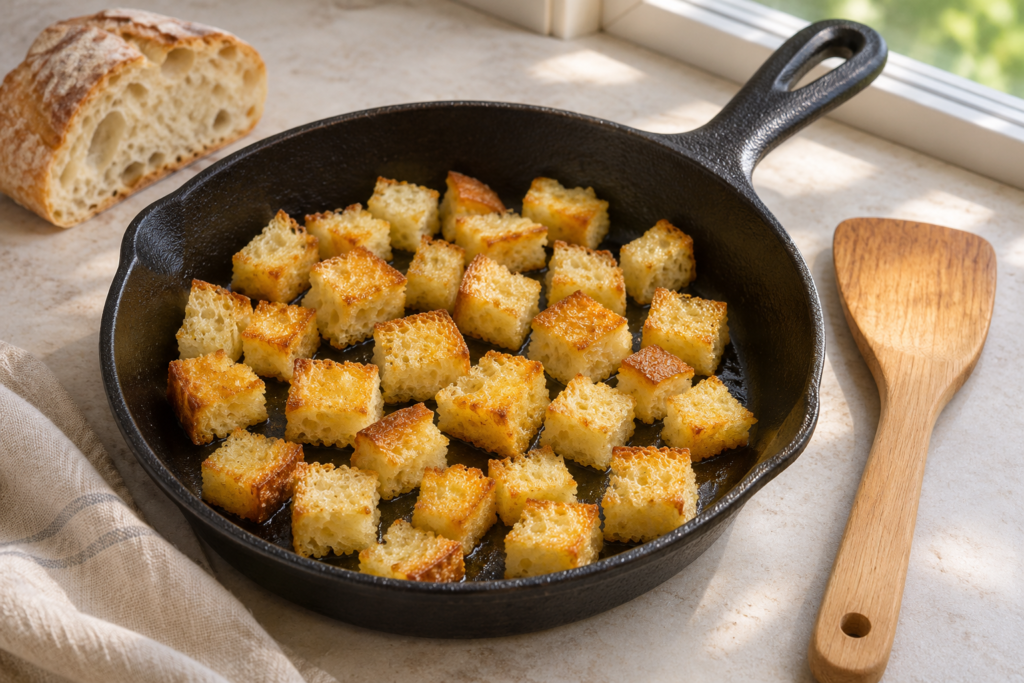
To make croutons in a pan, coat small, evenly cut bread cubes with olive oil and toast them in a single layer, turning often. Keep the heat moderate so the surfaces become golden before the bread burns. Transfer them out of the hot pan and check a cooled piece for crunch.
A small batch makes sense when you have two bowls of soup waiting and a piece of bread to use. You can watch the colour closely without heating the oven. The trade-off is attention: stay beside the hob rather than leaving the pan to cook itself.
Recipe development note: this recipe has not been independently kitchen-tested. Times and yield are planning estimates; bread type, moisture and pan size will change the result.
Ingredients for a small batch
- 2 loosely filled US cups plain bread cubes, cut about 1.5 cm across
- 1 tablespoon olive oil, plus 1 teaspoon only if needed
- A small pinch of salt, optional
- Black pepper, optional, added after cooking
Estimated yield: enough to top two generous or four smaller bowls of soup. Estimated time: 5 minutes to cut and coat, then 7–12 minutes in the pan. Use a wide skillet, roughly 26–28 cm across, or work in batches if the cubes pile up.
Plain sandwich bread, a country loaf or sourdough are reasonable starting points. Keep the crust if it is pleasant to eat; trim a particularly hard edge. Avoid filled breads for this method, and expect sweet or enriched bread to brown differently.
Use sound bread
Slightly dry bread is useful here, but stale and spoiled are different things. Do not make croutons from mouldy bread. UConn Extension’s mould guidance advises discarding bread or baked goods with visible mould. Toasting is not a way to rescue spoiled food.
Measure the cubes loosely instead of pressing them into the cup. A dense loaf and an airy loaf will not weigh the same at this volume. The more useful check is whether the pieces fit comfortably across your pan.
Toast the bread
- Cut evenly. Put the bread on a stable board and use a bread knife to make similar-sized cubes. Brush loose crumbs away so they do not scorch in the pan.
- Coat lightly. Toss the cubes in a bowl with the tablespoon of oil. Turn them several times to spread it around rather than soaking just one corner.
- Start gently. Warm the skillet over medium heat. Add the bread in one layer. It should toast steadily, not smoke.
- Turn often. Move the cubes around with a spatula as golden patches appear. Turn pale faces downward and move pieces from hotter areas to cooler ones. Reduce the heat if corners darken quickly.
- Check a sample. When several faces are golden, take out one piece and let it cool briefly before tasting. If the centre is wetter or softer than you want, continue over lower heat, turning frequently.
- Finish off the heat. Tip the croutons onto a plate in a loose layer. Add optional salt and pepper, then serve.
King Arthur Baking’s crouton guide notes that stovetop cooking suits small batches and needs frequent turning for even browning. If you need a large trayful, an oven method is more practical than crowding this pan.
When the colour and crunch do not match
Dark outside, soft inside: lower the heat. Larger or moister cubes need time for the centre to dry. Next time, cut slightly smaller pieces rather than increasing the heat.
Pale and dry-looking: check that the bread is touching the pan. If it is and the coating seems patchy, drizzle the optional teaspoon of oil into an open part of the skillet, then toss. Do not keep adding oil simply because browning is slow.
Uneven pieces: remove finished cubes as they are ready. A few smaller pieces should not have to wait for the largest ones.
Add them at the table
Scatter croutons over butternut squash and carrot soup just before eating. For a salad topping, try a small handful with cucumber dill yogurt salad. These are serving suggestions, not tested recipe variations.
Keep extra croutons separate from soup or dressing so they do not soak up liquid before you want them to. This small recipe is designed for immediate use, so make only what you need. A crouton can have a crisp shell and a slightly tender middle; it does not need to be hard all the way through.
Featured image: AI-generated serving illustration, not a photograph of a tested recipe.