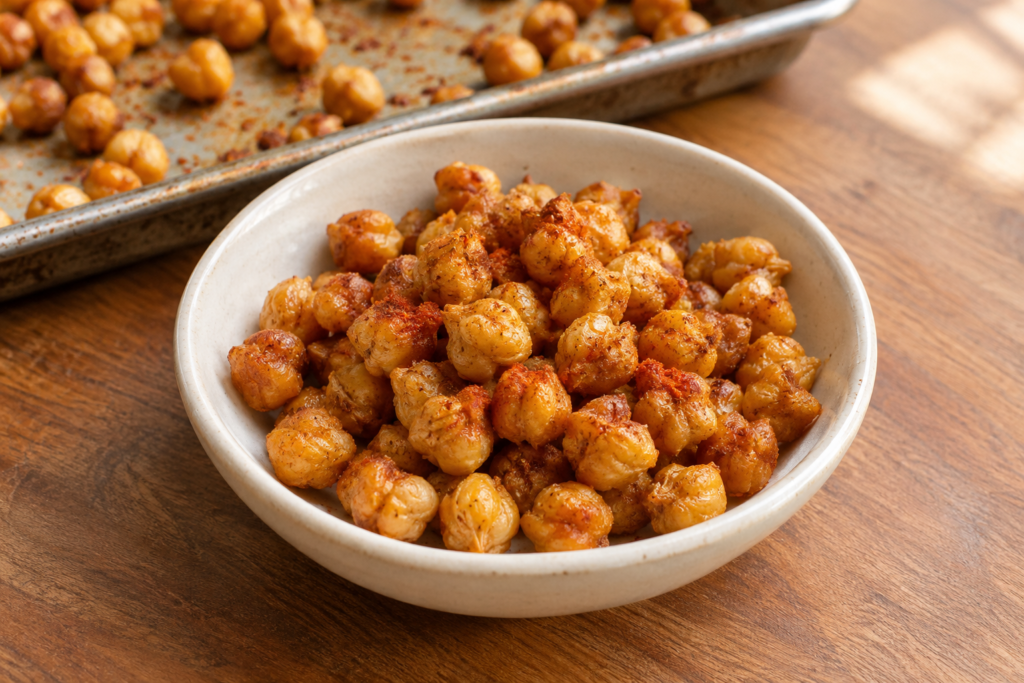
Roasted canned chickpeas start with a well-drained can, a clean towel and enough room on the baking tray. Dry the chickpeas thoroughly, coat them lightly with oil and roast until they are golden with crisp edges. Add smoked paprika and cumin after roasting so the spices do not spend the whole cooking time in the hot oven.
This is a one-can batch for a snack or a topping. Canned chickpeas are already cooked; the oven step changes their texture. Do not substitute uncooked dried chickpeas.
Recipe development note: this original seasoning variation has not been independently kitchen-tested. Timings and yield are estimates. Check colour and the texture of a cooled sample rather than relying only on the clock.
Ingredients for one can
- 1 can chickpeas, about 400–425 g or 14–15 ounces, drained and rinsed
- 1 tablespoon olive oil
- ¼ teaspoon smoked paprika
- ¼ teaspoon ground cumin
- A small pinch of salt, optional
- Black pepper to taste
Estimated yield: two to four small snack portions, depending on the can’s drained weight and how you serve them. Estimated time: 10–15 minutes preparation and roughly 30–50 minutes roasting, plus a brief cooling period. You will need a rimmed baking sheet, a clean towel and a mixing bowl.
Dry first and give them space
Drain the chickpeas, rinse them and spread them on a clean towel. Pat and gently roll them until their surfaces no longer look wet. Remove skins that come away easily; you do not need to peel every chickpea.
For more on handling the can liquid, see when to rinse canned beans. Here, the aim is a plain starting point without excess liquid on the tray.
Choose a tray large enough for a single layer with gaps. A little empty space is helpful. If you double the recipe, use two trays rather than piling a second can over the first.
Roast in stages
- Heat a conventional oven to 400°F (about 200°C). Place a rack near the centre.
- Toss the dried chickpeas with the olive oil. Spread on a rimmed baking sheet in one layer.
- Roast for 20 minutes, then carefully shake or stir the tray. Start watching for golden patches.
- Continue roasting, checking and turning about every 10 minutes. From around 30 minutes, remove one chickpea, let it cool enough to taste safely and check the centre as well as the surface.
- Stop when the chickpeas are golden and as crisp as you want without darkening towards burnt. Remove individual dark pieces early. Depending on moisture and the oven, the batch may need closer to 40–50 minutes.
- Transfer to a bowl while warm. Toss with the paprika, cumin, pepper and optional salt. Let the chickpeas cool enough to eat comfortably before serving.
The 400°F starting temperature and one-can approach draw on University of Illinois Extension’s chickpea snack recipe, which gives a 40–50-minute roasting range. This variation changes the seasoning and adds it after roasting. The earlier checks allow for trays or chickpeas that brown faster.
What if they are still soft?
Pale and soft: check for crowding, then continue roasting in short intervals. Stir so the same side is not pressed against the tray throughout.
Brown outside but soft inside: do not keep cooking blindly at the same rate. Remove any dark pieces and check more frequently. For the next batch, dry more thoroughly and avoid a crowded tray. A deeply browned surface does not guarantee a crisp centre.
They softened after serving: roasted chickpeas can lose crunch as they sit. Add them to soup or dressed salad just before eating. Once they absorb liquid, they will not remain a crisp topping.
Do not expect every brand of canned chickpeas to finish identically. Size and retained moisture vary; a sample from the actual tray is more useful than a promise of perfect crunch at a particular minute.
How to serve the batch
Scatter a few over vegetable orzo soup at the table. For a snack plate, offer lemon tahini dressing alongside rather than pouring it over the whole bowl. These are suggested pairings, not independently tested combinations.
Store leftovers as cooked food
This recipe has not been validated as a shelf-stable snack. For a simple, cautious approach, follow USDA leftover guidance: refrigerate promptly in a shallow covered container at 40°F (4°C) or below, within two hours of cooking, or one hour if the surrounding temperature is above 90°F (32°C). Use within three to four days. Refrigeration may soften the texture.
If reheating, follow USDA’s advice to heat leftovers to 165°F (74°C) throughout. Do not assume that a brief warming to restore crunch also meets that temperature.
Featured image: AI-generated serving illustration, not a photograph of a tested recipe.