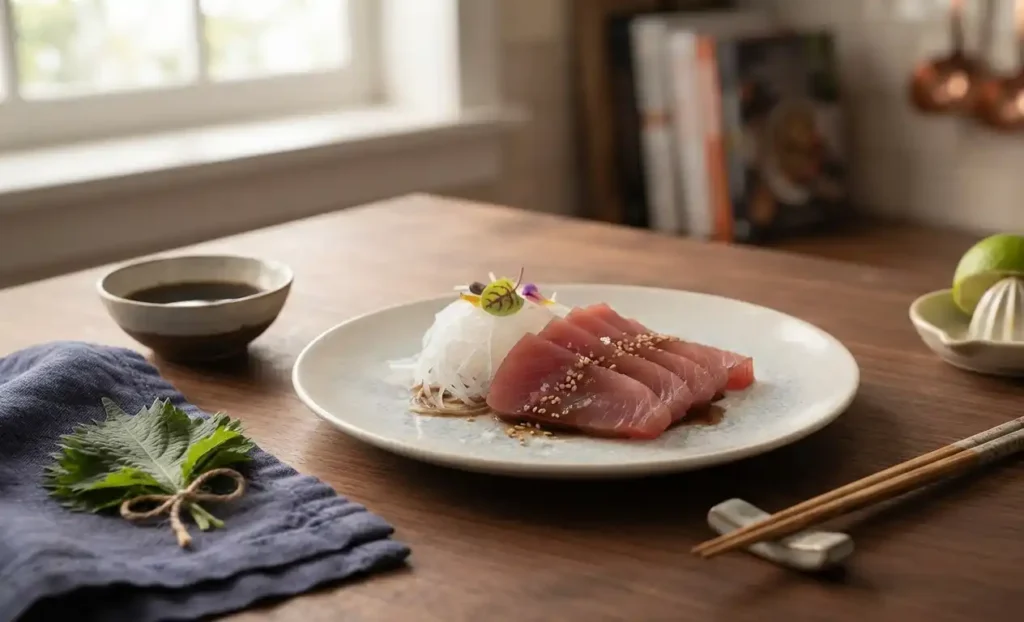
A tuna sashimi recipe needs very little cooking equipment, but choosing the fish deserves more attention than mixing the sauce. This version pairs thin tuna slices with a simple soy-lime dressing and a crisp cucumber or daikon garnish.
I like to keep the plate uncluttered so the ingredients are easy to enjoy. Prepare the garnish and sauce first, leave the fish chilled until the last moment, and slice only what you plan to serve.
Updated guidance: The earlier article gave conflicting buying advice and suggested cooking questionable leftovers. Those instructions have been corrected. This recipe has not been independently kitchen-tested by Fnbbuzz.
Choose tuna intended for raw consumption
Buy from a supplier who can explain the species, handling and whether the fish is intended to be eaten raw. Ask about parasite controls where applicable, thawing directions and the use-by date. A label such as “sushi-grade” is not a substitute for those answers. Ordinary tuna steaks sold for cooking should not automatically become sashimi.
The FDA’s seafood guidance explains that freezing can control parasites but does not eliminate all harmful germs. Thorough cooking reduces risk; children, pregnant people, older adults and people with weakened immune systems should avoid raw seafood.
Recipe at a glance
- Serves: 2 as a small starter.
- Active preparation: approximately 10–15 minutes once suitable fish is ready; thawing is extra.
- Method: raw preparation, not a cooking or parasite-destruction process.
- Equipment: sharp knife, clean board, small bowl, measuring spoons and chilled plates.
Ingredients
- 225 g tuna loin supplied specifically for raw consumption, kept refrigerated
- 2 tablespoons soy sauce
- 1 tablespoon fresh lime juice
- 1 teaspoon toasted sesame oil
- ½ cup shredded daikon or thinly sliced cucumber
- Pickled ginger and wasabi, optional, for serving
How to prepare tuna sashimi
- Arrange the washed daikon or cucumber on two chilled plates. Mix the soy sauce, lime juice and sesame oil in a separate bowl. Keep the tuna refrigerated while you prepare these items.
- Use a clean, sharp knife and a clean board. Pat the chilled tuna gently with disposable paper towel, then cut across the grain into slices about 6 mm (¼ inch) thick, using a long, smooth stroke rather than sawing.
- Divide the slices between the plates. Add pickled ginger or wasabi if using. Serve the sauce alongside so each person can dip lightly; do not leave the fish soaking in the sauce.
- Serve immediately. Refrigerate any unserved fish promptly at 4°C/40°F or below and follow the supplier’s use-by instructions. Discard fish if its temperature history or condition is questionable; cooking does not reliably rescue mishandled tuna.
Slicing and serving tips
Look for the lines running through the tuna and cut across them. A sharp blade helps produce neat edges without pressing the flesh flat. You do not need a special sashimi knife to start, but a short or blunt knife makes a smooth cut harder.
Keep the dressing separate until serving. Lime adds flavour; it does not make raw tuna safe. Start with a small amount of soy sauce so it does not overwhelm the fish. If using a lower-sodium version, taste the dressing before serving rather than assuming every brand tastes the same.
Cold storage and leftovers
Keep tuna at 4°C/40°F or below, thaw in the refrigerator according to the package directions and clean hands, boards and utensils carefully. Follow any instructions about removing vacuum packaging before thawing. Plan to eat the fish on the day it is prepared, within the supplier’s use-by period.
Do not leave perishable food out for more than 2 hours, or 1 hour above 32°C/90°F. These are discard limits, not recommended serving times. Put small portions out and keep the rest refrigerated.
Tuna can form histamine when mishandled. The FDA explains that accumulated histamine cannot be removed by washing, freezing or heating. Do not cook fish that smells wrong or has an uncertain cold-storage history in an attempt to save it.
Common questions
Is sashimi the same as sushi?
Sashimi is sliced seafood served without sushi rice. Sushi centres on seasoned rice and can include raw, cooked or vegetable toppings. This plate is a sashimi-style preparation, not a sushi roll.
Can I use frozen tuna?
Frozen fish can be appropriate when its supplier confirms it is intended for raw consumption and it has been handled correctly. The words “fresh” or “frozen” alone do not settle that question. Follow the supplier’s thawing instructions.
Does a short stay in my freezer make tuna safe for sashimi?
No. Brief chilling for texture is not a verified parasite-control process. Do not use a home-freezing shortcut to change fish sold for cooking into fish intended for raw consumption.
Can I make it without sesame oil?
Yes. Leave it out for a simpler soy-lime dressing. Check all sauce labels for allergens: soy sauce commonly contains wheat, and this recipe includes fish, soy and sesame.
More seafood reading
For another Japanese seafood preparation, read what okizuke is and how to choose it. That guide explains why a marinade and a safe processing method are different things.