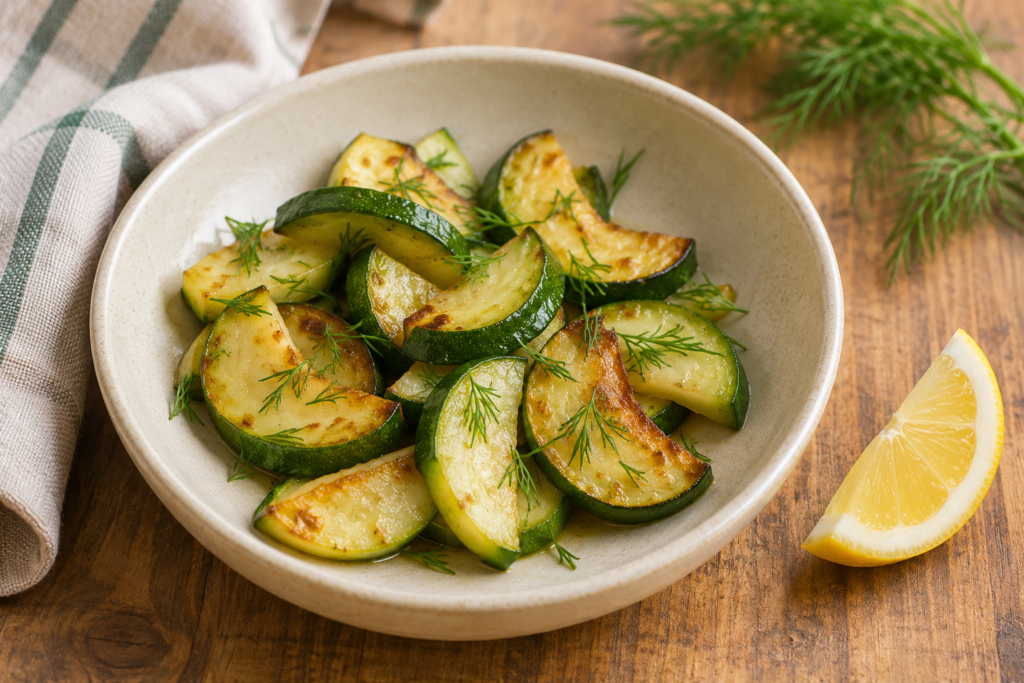
Sautéed zucchini without garlic can be a simple side of tender slices, olive oil, lemon and dill. Start with a wide pan, leave room between the pieces and add the lemon at the end. The aim is a few golden patches and a tender centre, not a crisp coating on every slice.
This small batch suits a meal for two. It uses fresh zucchini, also called courgette, and keeps the seasoning light enough that you can still taste the vegetable.
Recipe development note: this original formulation has not been independently kitchen-tested. Timings and serving yield are estimates; use the texture checks below.
Ingredients for two side portions
- 300 g fresh small or medium zucchini, about 2 small zucchini
- 2 teaspoons olive oil
- 1 teaspoon lemon juice, plus more to taste
- 1 tablespoon finely chopped fresh dill
- A small pinch of salt, optional
- Black pepper to taste
Estimated time: 10 minutes to prepare and 7–10 minutes to cook one batch. Allow extra time if your pan requires two batches. You will need a wide skillet and a spatula.
Choose and cut the zucchini
Use firm zucchini with tender skin. Wash under running water, dry, trim the ends and cut lengthwise in half. Slice across into half-moons about 1 cm thick. Try to keep the thickness consistent; a thin end piece will soften before a thick middle slice.
Young zucchini does not need peeling. For oversized squash with tough skin and large seeds, the University of Maine’s summer squash guide advises peeling and removing the seeds. Those larger vegetables need more preparation, so small or medium zucchini is the simpler choice here.
Cook the small batch
- Set a wide skillet over medium-high heat and add the oil. Swirl to coat the base. If it starts smoking, take the pan off the heat briefly and lower the setting.
- Add the zucchini carefully and spread it into one layer. If the slices overlap heavily, cook in two batches, dividing the oil between them.
- Leave the first side in contact with the pan for about 2 minutes, then check a slice underneath. Turn when it has light golden patches; turn sooner if it is darkening quickly.
- Continue cooking, turning occasionally, until a fork enters the centre easily but the slices still hold their shape. Begin checking at about 7 minutes total. The finish may be earlier or later depending on your pan and slice thickness.
- Take off the heat. Add the lemon juice, dill, pepper and optional salt. Toss gently, taste and add a few extra drops of lemon only if needed. Serve promptly.
Oregon State University Extension’s sautéed zucchini recipe supports the basic oil-and-skillet method and cooking until soft. Its thinner slices and garlic seasoning differ from this version; the timing here is an estimate for thicker half-moons with a lemon-and-dill finish.
When the pan is not behaving
The zucchini is pale and sitting in liquid. Check whether the pan is crowded. Remove some pieces to a plate and finish in smaller batches. Keep the lid off. Once the zucchini is tender, avoid cooking it indefinitely just to chase darker colour; it can lose its shape.
The outside is dark but the centre feels firm. Lower the heat and turn the pieces more often. Next time, check the slice thickness before cooking and start inspecting the underside sooner.
A few slices are falling apart. Lift those out first. A mixture of thick and thin slices needs staggered removal, not extra stirring.
The finish is too sharp. Do not add the remaining lemon. Serve alongside a plain grain or potato side. For the next batch, begin with half a teaspoon and taste before adding more.
Serving ideas and substitutions
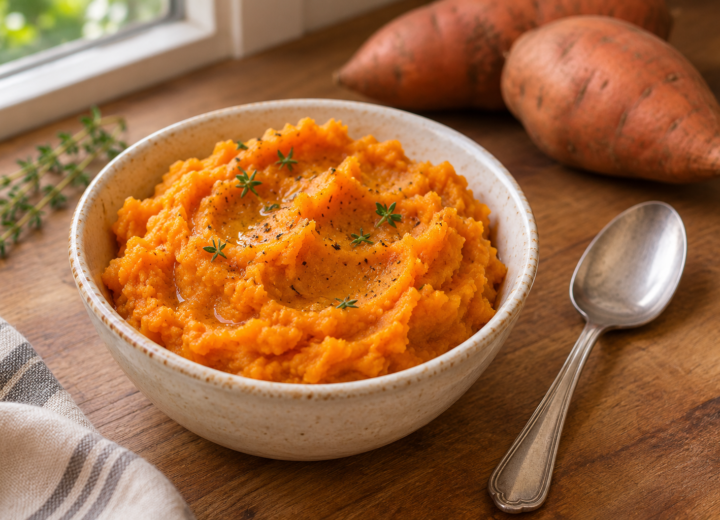
For a soft, contrasting side, serve it beside mashed sweet potatoes without milk. Or spoon a little lemon yogurt sauce without garlic alongside it; use less lemon on the zucchini if pairing the two. These combinations are serving suggestions, not tested pairings.
Fresh parsley can replace dill if that is what you have. Keep it to the same starting amount and adjust to taste. Frozen zucchini is not a direct substitute in this method because the thawing liquid changes how the pan cooks.
Leftovers and reheating
Transfer leftovers to a shallow covered container and refrigerate promptly at 40°F (4°C) or below. USDA guidance limits time out of refrigeration to two hours, or one hour above 90°F (32°C), and recommends using refrigerated leftovers within three to four days.
Reheat only the portion you need. Turn the slices gently in a skillet and check that they reach 165°F (74°C) throughout with a food thermometer. Expect softer zucchini after reheating; it will not have quite the same texture as the freshly cooked batch.
Featured image: AI-generated serving illustration, not a photograph of a tested recipe.