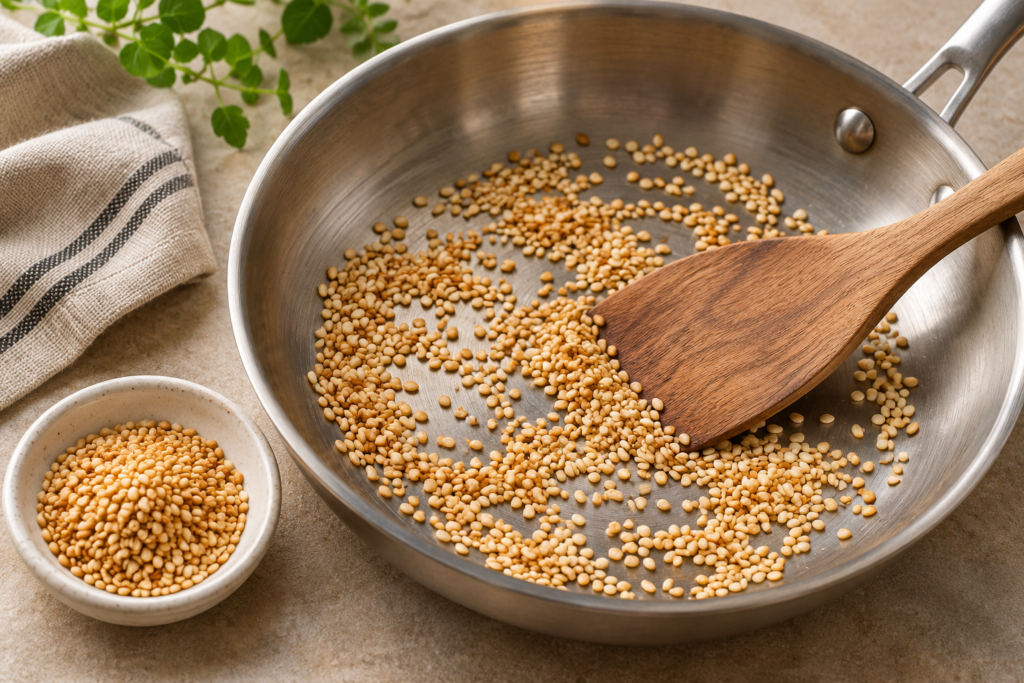
To toast sesame seeds in a pan, use a dry skillet over low to medium heat, keep the seeds moving and transfer them to a cool plate when they smell nutty and turn lightly golden. Have that plate ready before you start: switching off the burner does not cool the pan immediately.
A small spoonful can give plain vegetables or noodles a pleasant crunch. You do not need a large batch, and you do not need to wait for every seed to reach exactly the same shade.
Kitchen note: this is a researched cooking guide, not a report of independent kitchen testing. The small-batch quantities and planning times below are estimates.
Check whether the seeds need toasting
Read the packet first. Seeds labelled roasted or toasted may already have the flavour you want. Taste a few if the product is ready to eat; do not automatically give them the same heating time as raw seeds.
This guide starts with plain, dry white sesame seeds sold for culinary use. Follow any preparation instructions on the pack. Black sesame is harder to judge by colour, so a beginner may find white sesame easier to monitor. Do not use colour as a food-safety test or treat a brief home toast as a validated sanitising process.
A small batch for everyday meals
- 2 tablespoons plain white sesame seeds
- A clean, dry small skillet with enough room for a thin layer
- A wooden spoon or heat-safe spatula
- A cool, dry plate for the finished seeds
No oil or salt is needed for this plain garnish. Allow roughly 5–10 minutes for heating and toasting, plus cooling. The burner, pan and starting temperature can shift that estimate substantially; watch the seeds throughout rather than waiting for a timer.
Kikkoman’s guidance for using a frying pan instead of a sesame roaster recommends no oil, low to medium heat and constant stirring. It also warns that hot seeds can jump out of uncovered cookware.
Toast and cool
- Set up first. Put the cooling plate beside the stove, away from the burner. Keep the packet out of the cooking area so you are not juggling it over a hot pan.
- Warm the pan gently. Use low to medium heat and add the measured seeds. Spread them out; a deep pile makes it harder to see what is happening underneath.
- Keep moving them. Stir across the whole base, including the edges. If one patch darkens quickly, lower the heat and move the pan off the burner briefly while stirring.
- Watch the finish. Look for a light golden colour and a toasted aroma. Smoke or an acrid smell is a reason to stop, not a sign to keep going for more flavour.
- Empty the pan. Tip the seeds onto the plate immediately and spread them out. Let them cool before tasting or packing away.
A pale batch can be returned to gentle heat if its cooled flavour seems weak. A scorched batch cannot be made mild again by adding more raw seeds.
What went wrong
Some seeds are dark and others are pale
The pan may have a hot spot, or the seeds may be piled too deeply. Use a smaller batch next time and sweep the entire base with the spatula. Increasing the heat to catch up the pale seeds usually makes the dark ones worse.
The seeds smell burnt after leaving the heat
They may have stayed in the hot pan too long. Transfer them as soon as they reach the finish you want. If the cooled seeds taste bitter or burnt, discard the batch and start again at lower heat.
The packet already says toasted
Use those seeds as supplied if you like their flavour. Reheating is optional, and any refresh should be brief and closely watched. There is no benefit in forcing already-browned seeds through a raw-seed schedule.
Where to use the finished garnish
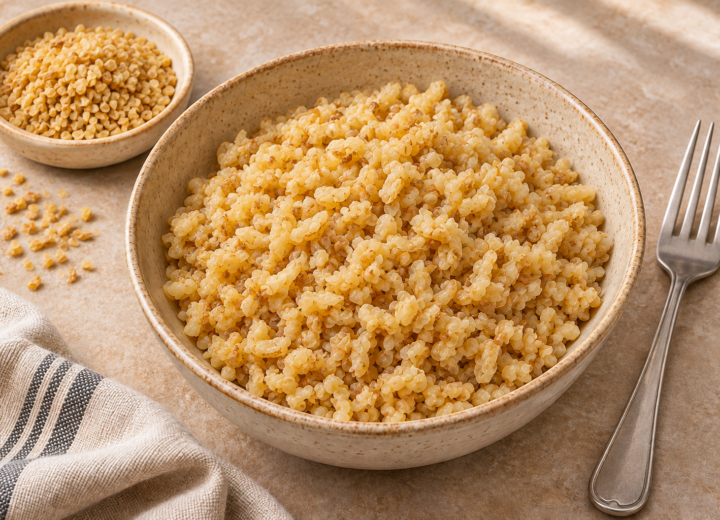
Add a small pinch at the table to sautéed frozen green beans, or use it as a finishing touch for sesame noodle salad with peanut sauce. For a grain bowl, start with cooked bulgur wheat and vegetables, then scatter the seeds over the top.
Keep spare seeds completely cool and dry before closing them in a clean airtight container. Follow the seed producer’s storage instructions and label the toasting date. Making only what you need avoids committing to a long homemade shelf-life estimate.
Allergy note: sesame is a major food allergen recognised by the FDA. Keep the garnish identifiable and check suitability before serving it to someone with a food allergy.
Featured image: AI-generated cooking illustration, not a photograph of a tested method.