To cook bulgur wheat, first check the grind and the instructions on your packet. Fine grains may use a hot-water soak; larger grains often need a covered simmer. Measure the water for that product, then check tenderness before deciding whether to cook longer or drain.
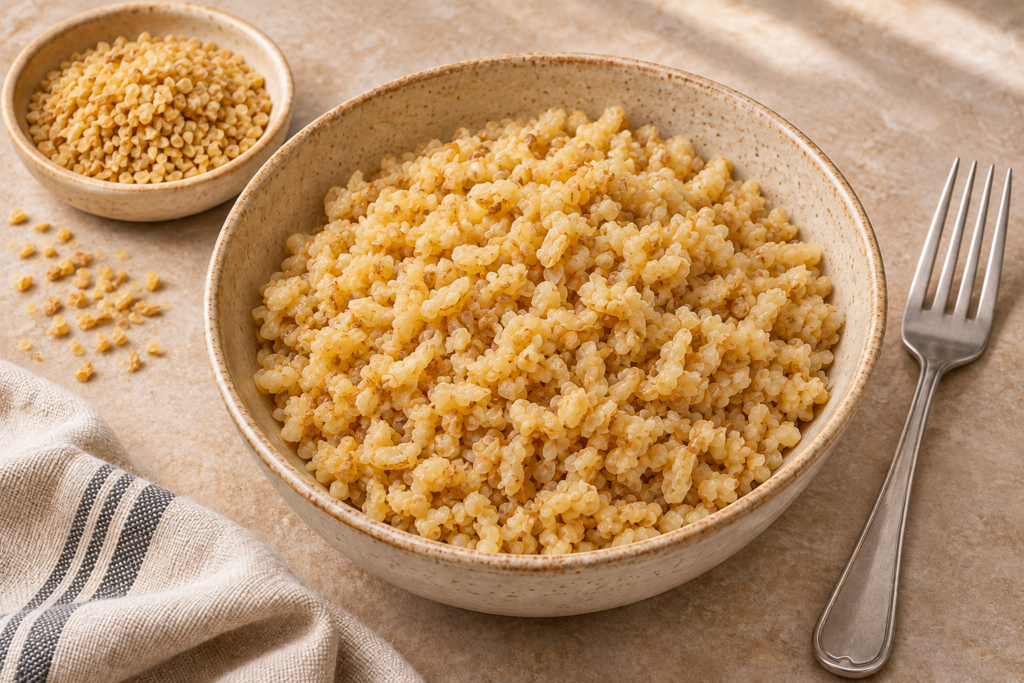
A bowl of bulgur should suit the meal you are making. For a grain bowl, aim for tender pieces that separate with a fork. For a softer spoonable side, a little more moisture can be welcome. Neither result needs a complicated seasoning mix.
Kitchen note: this is a researched cooking guide, not a report of independent kitchen testing. The manufacturer timing below applies to the named product; total preparation time and serving yield are estimates.
Read the packet before measuring
Bulgur is wheat that has been partly cooked, dried and broken into pieces. It is not interchangeable with every product labelled cracked wheat. Check the ingredient name and preparation directions rather than judging only by colour.
Fine, medium, coarse and extra-coarse refer to the size of the pieces. Smaller pieces hydrate differently from larger ones, which is why a ratio copied from one recipe may disappoint with another bag.
- Fine bulgur: choose a method specifically written for that product. Many fine-grain preparations use soaking, so do not automatically give it a long simmer.
- Medium or coarse bulgur: look for a stovetop method and a stated liquid quantity. Start checking at the packet’s earliest suggested time.
- Extra-coarse bulgur: do not assume it will finish on the same schedule as a quick-cooking bag. Follow its directions and test the centre of the grains.
If the label is missing, identify the product through the manufacturer’s website before committing a large batch. For a different ingredient with a similar role at the table, see how to cook pearl couscous; its method belongs to pasta, not bulgur.
A verified stovetop example
Bob’s Red Mill’s Golden Bulgur instructions use 1 cup bulgur with 2 cups water. The manufacturer directs cooks to bring the mixture to a boil, cover and simmer until tender, about 12 minutes, then drain excess water and fluff.
For a smaller batch using that same product and method, measure ½ cup dry bulgur and 1 cup water. This preserves the stated ratio; it does not mean the cooking time should be cut in half. Use a small saucepan with a lid. Follow your own packet if its directions differ.
Plan on roughly 20–25 minutes including measuring, heating and finishing, with about 2 small side portions. Those are planning estimates, not tested results. Keep the first batch plain, or season lightly after cooking so it works with the rest of the plate.
- Measure together. Put the bulgur and its measured water into the saucepan. If the packet calls for rinsing, do that first and drain thoroughly.
- Bring to a boil, then lower the heat. Cover and maintain a gentle simmer. A vigorous boil can drive off water before the grains soften.
- Check near the stated time. Cool a few grains on a spoon before tasting. The centre should be tender, with a little chew rather than a hard, gritty bite.
- Finish according to the texture. If tender but wet, drain through a fine-mesh sieve. If still hard, use the troubleshooting steps below instead of serving it just because the timer rang.
- Fluff gently. Return to the pan or serving bowl and separate the grains with a fork. Add seasoning and serve.
Why soaking ratios are different
A soak and a simmer lose water differently. You cannot safely assume that a water quantity designed for a covered bowl will behave the same way in a pot on the stove.
Use the packet’s soaking directions when they are provided. Put the measured bulgur in a heatproof bowl, add the specified boiling water and cover as directed. Check tenderness at the stated time and drain if the method calls for it. Do not substitute a brief room-temperature soak for a specified hot-water preparation.
There is also no need to soak first and then apply the full dry-grain stovetop ratio unless your recipe explicitly asks you to do both. The grains have already taken up some water.
Fix the problem you can see
Hard grains and a dry pan
Add 1–2 tablespoons hot water, cover and continue over low heat for a few minutes, then check again. Repeat cautiously if needed. Note whether the lid was loose or the heat too high so you can adjust the next batch.
Tender grains with water left over
Drain them. Continuing to boil a tender batch just to remove every drop can soften it more than you want. A fine sieve is easier than trying to pour water around small grains.
Soft or sticky bulgur
Stop cooking and avoid vigorous stirring. You cannot restore a firm centre once the grain has softened too far. Serve it as a softer base under vegetables or soup. Next time, check the grind, measure the liquid carefully and taste earlier.
Turn plain bulgur into a meal
Add cooked vegetables and a spoonful of lemon yogurt sauce without garlic at serving time. For a dairy-free combination, use white bean dip without tahini beside the grains. Keep each component’s storage instructions in mind.
Cool, store and reheat
Refrigerate cooked bulgur promptly in shallow covered containers at 40°F (4°C) or below; use within 3–4 days. Keep room-temperature time under two hours, or one hour above 90°F (32°C), following USDA leftover guidance.
Reheat with a splash of water, stirring to distribute heat. USDA recommends at least 165°F (74°C) for reheated leftovers; check with a food thermometer. Do not leave a large pot on the counter to cool for hours.
Featured image: AI-generated food illustration, not a photograph of a tested cooking method.