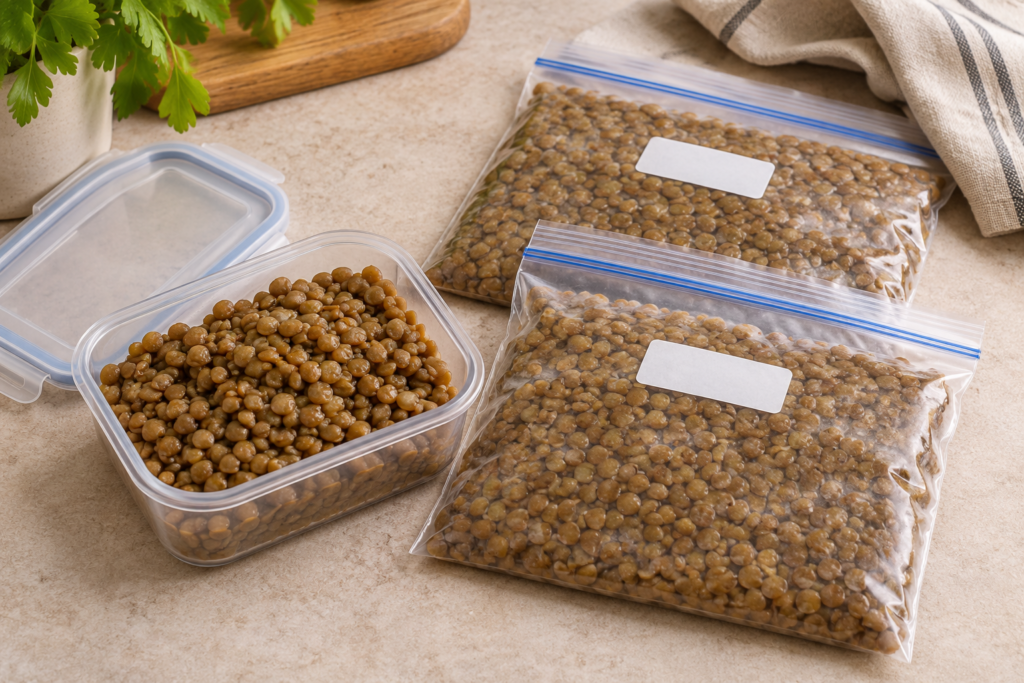
Yes, you can freeze cooked lentils. Divide them into small portions, cool them promptly using shallow containers, and pack them in freezer-safe containers or bags. Keep the freezer at −18°C/0°F or below. A practical quality target is to use them within three months; reheat leftovers to 74°C/165°F when serving hot.
A large frozen block is not much help when you only need a handful for lunch. I would start with the meals you are likely to cook, then freeze enough lentils for each one. Half-cup and one-cup portions are easier to use than an entire saucepan’s worth.
Which lentils freeze best?
Whole green, brown and black lentils are useful when you want separate pieces in a grain bowl or salad. Cook them until tender, but avoid cooking them into a mash if keeping their shape matters.
Split red lentils soften and break down more readily. That texture suits dal, blended soup and thick sauces. Freezing does not restore firmness to lentils that were already very soft.
You can also freeze lentils as part of a finished dish. A soup containing cream, potatoes or delicate vegetables may change texture because of those ingredients, not because the lentils cannot be frozen. Follow the storage guidance for the whole dish.
What you need
- Freshly cooked lentils, or safely refrigerated cooked lentils still within their storage window
- A colander for draining plain lentils
- Shallow food-storage containers
- Freezer-safe bags or containers with secure lids
- A label and pen
- A food thermometer for checking reheated portions
You do not need to cook a special batch just for the freezer. Set aside the extra portion when cooking dinner, before it sits around on the table.
How to freeze cooked lentils step by step
- Decide how you will use them. Drain excess cooking water from plain lentils intended for bowls or salads. For dal or lentil soup, keep the liquid that belongs in the finished dish.
- Cool promptly. Divide a large batch into shallow containers and refrigerate promptly. Do not leave a deep pot on the counter until it feels completely cold. Small, shallow portions release heat more easily.
- Measure useful portions. Once chilled, divide the lentils into amounts you can use in one meal. Label the quantity as cooked lentils, so it is not confused with a dry measurement later.
- Pack for freezing. Press excess air from freezer bags without crushing the lentils. Lay sealed bags flat. With rigid containers, leave expansion space, especially for soup, and follow the container manufacturer’s instructions.
- Label clearly. Write the lentil type, cooked quantity and freezing date. Add the original cooking date too if the lentils spent time in the refrigerator before freezing.
- Freeze and rotate. Freeze portions in a single layer where practical, then stack when solid. Use older portions first.
FoodSafety.gov advises chilling perishable leftovers within two hours, or within one hour when temperatures are above 32°C/90°F. Those limits include time spent portioning and packing. Freezing cannot make lentils safe if they have already been mishandled.
How long do cooked lentils last?
In the refrigerator: Use the general leftover limit of three to four days at 4°C/40°F or below. Freeze sooner if you already know you will not use them in that time.
In the freezer: Aim for three months for quality. Iowa State University Extension’s lentil guide recommends that freezer window. Its refrigerator advice is four to five days; this article uses the more conservative general leftover guidance for refrigerator planning.
Quality is different from safety: The freezer target is about texture and flavour, not a sudden expiry date. Continuous freezing at −18°C/0°F keeps safely handled food frozen, but does not undo earlier unsafe storage. If you cannot establish how a batch was handled, do not rely on its freezer date alone.
How to thaw and reheat frozen lentils
Refrigerator thawing: Put a sealed portion in a dish in the refrigerator and allow time to thaw. A flat, small portion is easier to handle than a thick block. Do not thaw it on the kitchen counter.
Heating from frozen: For soup or a saucy dish, a small frozen portion can go straight into the saucepan with enough liquid to prevent sticking. Break it up as it softens and stir. A bubbling edge does not prove that the centre is hot.
Microwave: Use a microwave-safe covered container with a vent. Stir during heating and check several places, especially the centre. Heat thawed or frozen leftovers to 74°C/165°F, the FoodSafety.gov temperature for leftovers.
After refrigerator thawing, use promptly and stay within general leftover guidance; do not keep repeatedly thawing and refreezing the same large container. Portioning once is simpler and helps preserve texture.
Ways to use a frozen portion
- Soup: Stir plain cooked lentils into a vegetable soup near the end and heat thoroughly. If making our lentil and sweet potato soup, remember that replacing dry lentils with cooked lentils changes the cooking time and liquid needs; it is not a one-for-one swap by volume.
- Warm bowl: Reheat with a little water or stock, then serve with cooked grains and vegetables. Add dressing after reheating.
- Dal or sauce: Softer red lentils work well when a creamy texture is welcome. Reheat gently with liquid, stirring to prevent sticking.
- Cold salad: Use fully cooked lentils that were cooled, frozen and refrigerator-thawed safely. Keep the assembled salad cold until serving. Browse the chickpea cucumber salad for a different pulse-based lunch.
Common freezing problems
Mushy lentils: Choose a firmer whole variety next time and stop cooking when tender. Use the softer batch in soup rather than trying to make it behave like a crisp salad ingredient.
Dry or icy edges: Check the packaging seal and remove excess air. Freezer burn affects quality; it is not a reliable test of whether the food was handled safely.
One solid lump: Freeze smaller, flatter portions next time. Do not leave the whole block on the counter to soften so you can chip pieces off.
Common questions
Can you freeze canned lentils?
Yes, after opening, transfer unused lentils to a suitable food-storage container. Drain if that suits the intended dish and freeze promptly in portions. Do not freeze an unopened can.
Can you freeze cooked red lentils?
Yes. Expect a soft texture and plan to use them in dal, soup or a sauce.
Should I rinse lentils after cooking?
It is not a required freezing step. Drain plain lentils as needed; keep a finished soup or dal together. If rinsing for a particular recipe, use safe drinking water and clean equipment, then chill promptly.
Can freezing rescue lentils left out overnight?
No. Freezing is a storage method, not a way to correct unsafe time at room temperature. Discard that batch.