
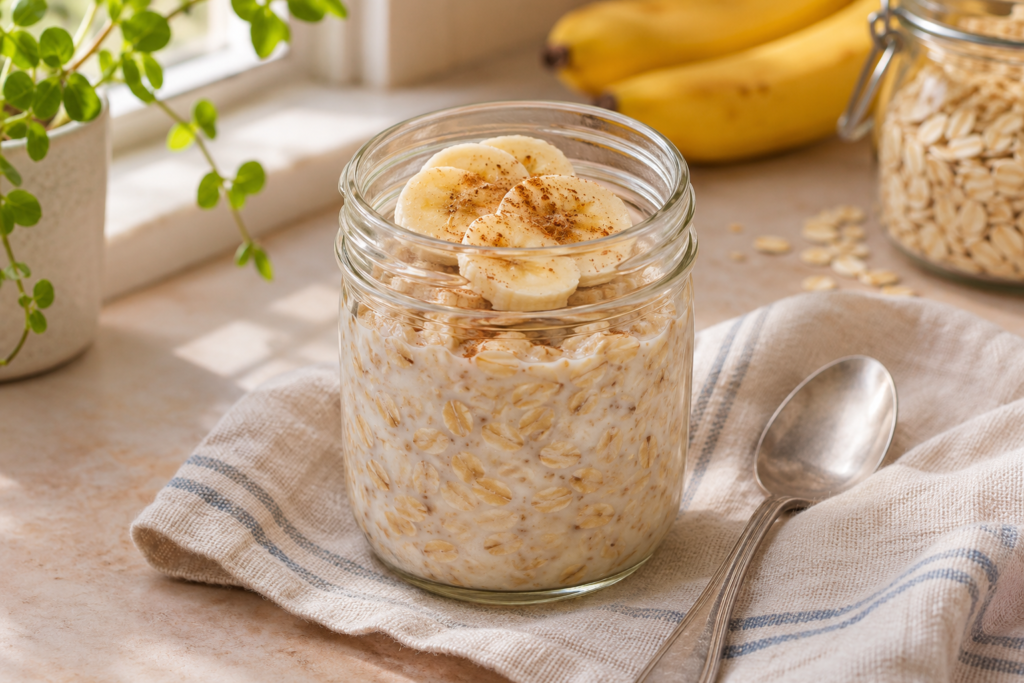
You can make overnight oats without yogurt by soaking rolled oats in milk in the refrigerator. For one serving, start with ½ cup rolled oats and ½ cup milk. Stir in a little more milk in the morning if you prefer a looser texture. Yogurt and chia seeds are optional, not requirements.
I like the idea of a breakfast that starts with what is already in the cupboard. You do not need to buy a tub of yogurt or a long list of toppings for this one. Keep the first jar simple; once you know the texture you enjoy, changing the fruit is easy.
Recipe note: This is a research-based preparation guide, not a recipe independently kitchen-tested by Fnbbuzz. Preparation and soaking times are estimates.
What replaces yogurt in overnight oats?
Milk supplies the liquid that softens the oats. The oats themselves give the mixture body as they soak, so you do not have to replace yogurt with another thick ingredient. The result is softer oatmeal rather than the tangier, thicker mixture you get with yogurt.
Carnegie Mellon Dining’s overnight-oats guide gives a yogurt-free starting range of ½ cup oats to ½–¾ cup milk. That range is useful because oat brands and personal preferences differ. Begin at the lower end and adjust after soaking.
Ingredients for one serving
- ½ cup old-fashioned rolled oats, approximately 40–50 g depending on the brand
- ½ cup (120 ml) pasteurized milk or a suitable plant-based drink
- ¼ teaspoon ground cinnamon, optional
- 1 teaspoon maple syrup, optional; add after tasting
- 2–4 tablespoons extra milk, only if needed after soaking
- Fresh fruit, nuts or seeds for serving, optional
Use a clean covered container with enough room to stir. A jar is convenient, but an ordinary food-storage container works too. Allow around five minutes to prepare, followed by overnight refrigeration, approximately six to eight hours.
How to make overnight oats without yogurt
- Put the rolled oats in the container. Add 120 ml milk and the optional cinnamon. Stir well, including around the bottom where dry oats can collect.
- Cover and refrigerate immediately at 4°C/40°F or below. Leave overnight for the oats to soften. Follow any preparation instructions on your oat package.
- In the morning, stir before judging the consistency. Add extra milk one tablespoon at a time if the mixture is too thick.
- Taste, then add the optional maple syrup. Finish with washed, cut fruit and any nuts or seeds you want to use. Eat cold, or transfer to a microwave-safe bowl and warm, stirring between short heating intervals.
Do not soak the mixture on the kitchen counter. Milk and cut fruit need cold storage, and an overnight soak is much longer than the usual safe room-temperature window for perishable food.
Choose ingredients for the result you want
Rolled oats: These are the starting point for this method. Quick oats generally soften more and can become paste-like. Steel-cut oats have a different structure; do not expect the same overnight result from a direct swap.
Dairy-free milk: Use a plant-based drink you enjoy drinking. Read the label if protein, added sugar or allergens matter to you; soy, oat and almond drinks are not nutritionally interchangeable. Leaving out yogurt alone does not make the recipe dairy-free if you still use cow’s milk.
Gluten-free ingredients: Choose oats labelled gluten-free when needed, and check toppings and preparation equipment for cross-contact. A yogurt-free recipe is not automatically gluten-free.
Chia seeds: Leave them out for the base above. They absorb liquid and change the texture, so adding a large spoonful while keeping the milk unchanged can make a much thicker breakfast. If you want a seed-based breakfast instead, browse our recipe collection for more breakfast ideas.
Fix the texture before adding more toppings
Too thick? Stir in a tablespoon of milk, then check again. You can loosen the mixture gradually without turning it watery.
Too thin? Stir thoroughly and let it stand in the refrigerator a little longer. For the next jar, measure the oats rather than eyeballing them, and start with less milk. Fruit that releases juice can also loosen the mixture.
Too chewy? Check that you used rolled oats and allowed a full overnight soak. For a brand that stays firm, warming the oats may suit your taste better.
Too bland? Try cinnamon, a small amount of sweetener or fruit you actually like. More ingredients do not necessarily make a better breakfast.
Three simple topping ideas
- Banana and cinnamon: Slice half a banana over the oats just before eating. Add chopped walnuts if suitable for your diet.
- Apple and peanut butter: Add a little finely chopped apple and a spoonful of peanut butter. Check peanut allergies and stir in extra milk if the mixture becomes stiff.
- Berry and vanilla: Add washed fresh berries and a few drops of vanilla extract. Keep the base unsweetened until you taste the fruit.
Storage and taking a jar to work
For a small household batch, make one or two days at a time and add fresh toppings when serving. This is a conservative planning suggestion, not a tested shelf-life claim. Use ingredients within their labelled storage limits, and do not assume that soaking extends the life of milk that is already near the end of its usable period.
FoodSafety.gov’s food-handling guidance recommends refrigeration at 4°C/40°F or below. Keep the jar cold during travel with an insulated bag and ice pack. Discard perishable food left out for more than two hours, or one hour above 32°C/90°F. Smell alone cannot establish safety.
Common questions
Can I make these without yogurt and without chia seeds?
Yes. The base uses only oats and milk. Cinnamon, sweetener and toppings are optional.
Can I use water?
Water can soften oats, but it will not give the same flavour or nutritional contribution as milk. Treat it as a different version and adjust after soaking rather than expecting an identical result.
Can I eat overnight oats warm?
Yes. Use a microwave-safe bowl, follow your appliance instructions and stir so the oats warm evenly. Do not heat a sealed jar or put a metal lid in the microwave.
What if I prefer baked breakfasts?
Our vegan baked oatmeal is another breakfast idea to explore when you would rather turn on the oven than prepare a cold jar.