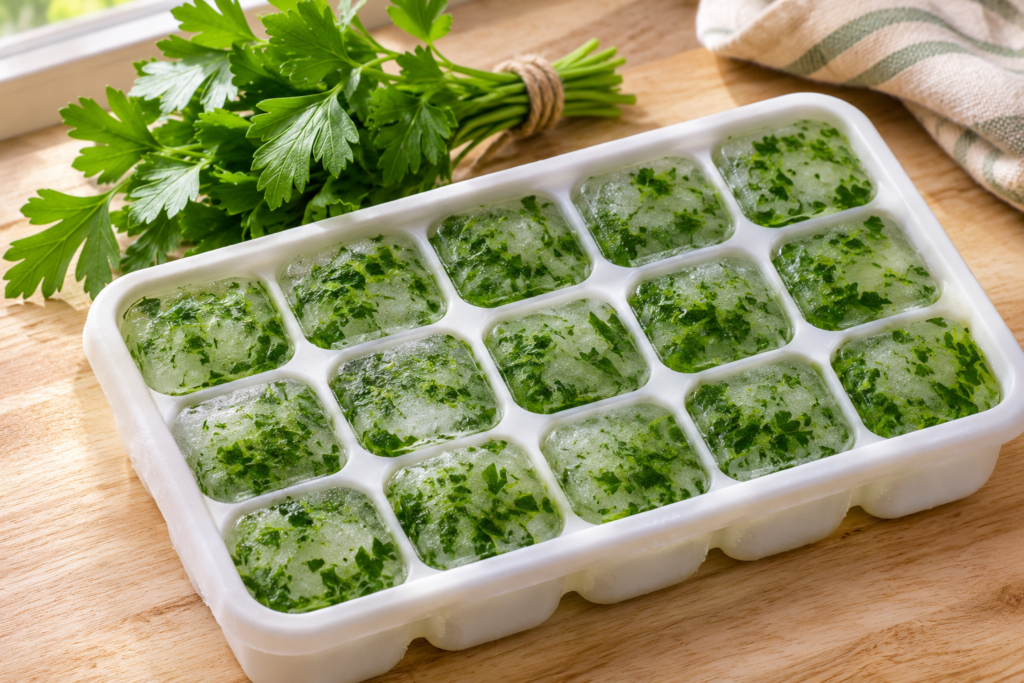
To freeze fresh parsley, wash and dry it, then freeze the leaves on a tray or pack chopped parsley into ice cube trays with water. Transfer the frozen portions to an airtight freezer container. Choose loose leaves when you want to sprinkle a little into food; choose water cubes for soup or another dish that can take extra liquid.
The useful question is what you will cook with it. A parsley cube is convenient for a saucepan of soup, but less helpful when you are trying to brown vegetables in a dry skillet.
This is a researched preservation guide, not a report of independent kitchen testing. Preparation and freezing times vary with the quantity, tray and freezer.
What freezing changes
Parsley will not come back from the freezer as a crisp bunch. South Dakota State University Extension explains that freezing changes herb texture, making frozen herbs better suited to cooked food than fresh garnishes. Keep some fresh parsley aside if the finished dish needs a bright, leafy topping.
Wash and sort before you start
Use fresh parsley in good condition. Discard spoiled leaves and remove coarse stems from the portion you plan to chop. Wash your hands and work with clean utensils.
Rinse the parsley under running water, then dry it with a clean towel or salad spinner. The FDA’s produce-cleaning guidance recommends plain running water rather than soap. For loose freezing, pay particular attention to water trapped between the leaves: wet clumps are harder to portion later.
Option one — freeze loose leaves
- Spread the washed, thoroughly dried leaves in one layer on a clean freezer-safe tray. You can roughly chop them first if that is how you normally use them.
- Freeze until the leaves are frozen, rather than relying on a fixed number of minutes.
- Transfer promptly to a freezer bag or airtight freezer container. Press excess air from a bag before sealing.
- Label with the herb name and freezing date. Return it to the freezer straight away.
This tray-first approach follows Rouxbe’s herb-freezing technique. It keeps the initial layer thin so you can take small amounts instead of thawing an entire bunch.
Option two — make measured water cubes
Measure the parsley before adding water. A cube’s total size does not tell you how much herb it contains.
- Chop the clean parsley as you would for cooking.
- Put one tablespoon of chopped parsley into each compartment of a clean ice cube tray. If the compartments are very small, use one teaspoon instead and label that amount.
- Add enough water to cover the herbs, leaving room for the water to expand. Freeze until solid.
- Remove the cubes and pack them in an airtight freezer container or bag. Label the herb, amount per cube and date.
The University of Minnesota Extension herb guide supports freezing chopped herbs in water-filled ice cube trays. A label such as “parsley, one tablespoon per cube” makes the portions useful long after you have forgotten which tray you used.
Use it straight from frozen
Add a parsley cube to simmering vegetable orzo soup and let the ice melt into the broth. Account for that water if the soup is already thin. Start with one portion; you can add more after tasting.
For sautéed mushrooms, loose frozen parsley is the more convenient choice. Stir a little in near the end of cooking, allowing any ice to melt. Reserve fresh leaves if you also want a decorative garnish. These are suggested uses, not independently tested combinations.
Storage and small fixes
Follow the six-month storage guidance from South Dakota State University Extension for airtight frozen herbs. Minnesota’s broader herb guide allows up to one year; this guide uses the shorter window for planning. Date the package and use the oldest batch first.
One solid clump: next time, dry the leaves more thoroughly and spread them out before freezing. Do not leave the whole bag on the counter to soften every time you need a pinch.
Too much water in the dish: switch to loose leaves next time, or choose smaller cubes. The water is part of the frozen portion and will end up in the pan.
Soft leaves after thawing: that texture change is expected. Use the parsley in cooked food rather than expecting it to behave like a fresh salad herb.
Featured image: AI-generated illustration, not a photograph of a tested preservation batch.