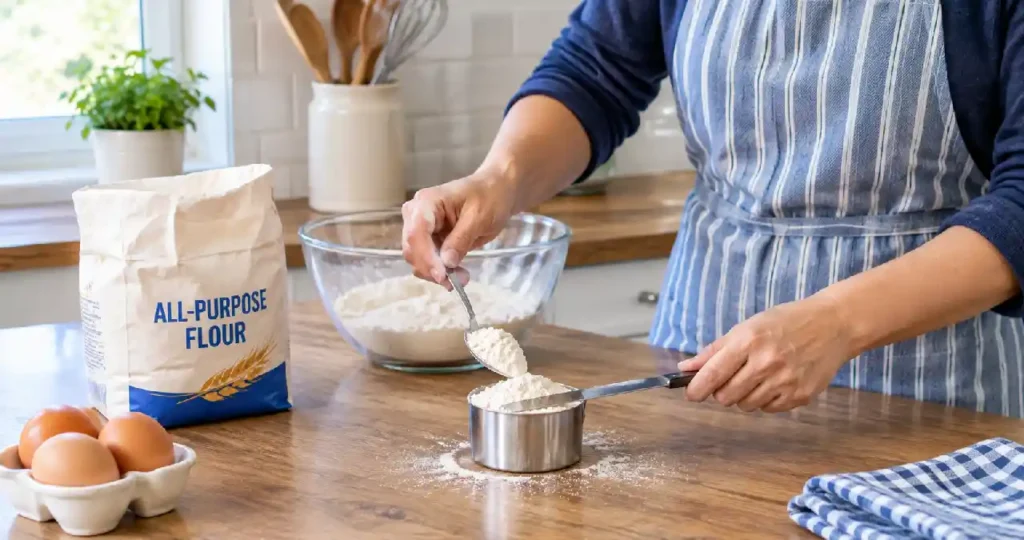
To measure flour without a scale, loosen it with a spoon, spoon it lightly into a dry measuring cup and sweep the excess off with a straight edge. Do not press, shake or tap the flour down. If your recipe specifies a different measuring method, follow that instruction.
The aim is a loosely filled, level cup. A mugful or a firmly packed scoop may look close enough, but it can put a different amount of flour into your mixing bowl.
| Kitchen note: This is a researched measuring guide, not a report of independent baking tests. |
Gather three simple tools
Use a dry measuring cup with a flat rim, an ordinary spoon for transferring flour, and a straight-edged utensil such as the back of a butter knife. Keep everything dry. A cup that is damp from measuring milk will catch flour on its sides and make the job awkward.
Choose the cup size the recipe needs. For 1½ cups, measure one level cup and one level half-cup. Do not judge halfway down an unmarked one-cup measure by eye.
Spoon and level the flour
- Loosen it. Stir the flour gently in its bag or container so you are not measuring a compressed layer.
- Fill lightly. Spoon flour into the dry cup until a small mound rises above the rim. Let it fall in rather than pushing it into corners.
- Level once. Sweep a straight edge across the rim to remove the mound. Keep the edge against the rim without pressing into the flour.
- Add and count. Empty the measured flour into the bowl. If you need several cups, count each completed measure before starting the next.
This follows King Arthur Baking’s volume-measuring guidance. Scooping directly with the cup and tapping it on the counter can compact the contents, defeating the purpose of a light fill.
Why cup weights disagree
A cup describes volume; grams describe mass. Flour type and how tightly it sits in the cup affect the weight. For example, King Arthur’s ingredient chart uses 120 g for one cup of all-purpose flour. Treat that as the reference for that source, not proof that every cup in every recipe must weigh exactly 120 g.
If a recipe supplies both cups and grams, use its own gram quantity when you have a scale. Do not replace the author’s weight with a conversion from another website. If only grams are given and you have no scale, look for the author’s volume equivalent or a recipe written in cups. A rough conversion is not an exact substitute.
Read the flour instructions before filling the cup
Check the ingredient name, quantity and any note about sifting or measuring. Plain flour, whole-wheat flour and a gluten-free blend are not interchangeable just because you measure the same volume.
If sifting is specified, follow the sequence the author gives. If that sequence is unclear, check the recipe notes rather than guessing. A measuring technique cannot resolve an ambiguous ingredient instruction.
For a recipe such as vegan chocolate chip pancakes, read the flour and mixing instructions before starting. Accurate measurement helps you follow the intended recipe; it does not guarantee that every batter should have the same thickness.
Common measuring questions
Can I use a drinking mug?
A mug is not a standard dry measure. Its capacity may differ, and filling it to a comfortable drinking level adds another guess. Use marked measuring equipment for a recipe written in cups.
Can I use a liquid measuring jug?
A dry cup is easier because you level directly at its rim. Flour in a jug can mound above the line or leave gaps below it. Avoid treating a heaped surface as a level reading.
What if I already packed the flour?
If it is still separate from the other ingredients, return it to the flour container, loosen it and measure again. Once mixed into a batter, do not try to correct it by adding an arbitrary splash of milk; that changes other proportions too.
For smaller quantities, use proper measuring spoons. Fnbbuzz’s teaspoon and tablespoon guide explains the units; the same light fill and level finish still matter for flour.
Clean up raw flour
FDA guidance identifies flour as a raw food. Do not taste raw flour, dough or batter. Keep flour away from ready-to-eat food, follow cooking directions and wash hands, utensils and surfaces after handling it.