Rinse plain canned beans when you want less packing liquid in the dish or want to remove some sodium. Keep some liquid when the recipe uses it to add body to soup, stew or a dip. If the beans come in a seasoned sauce, follow the recipe or package directions before draining away that sauce.
There is no single rule that improves every meal. Start with what you are making: a salad needs a different finish from a pot of beans with broth.
Kitchen note: this is a researched ingredient guide, not a report of independent kitchen testing. It covers commercially canned beans, not instructions for cooking dried beans or preserving beans at home.
Choose by the dish
- Salad: drain and rinse plain beans, then let excess water drip away before adding dressing.
- Dip: follow the recipe. Drained beans give you control over how much liquid you add; reserved bean liquid can be useful when the recipe calls for it.
- Soup or stew: either approach can work. Keep some liquid when you want its body and flavour; rinse when the recipe specifies it or you prefer to control the broth separately.
- Beans in tomato, chilli or another prepared sauce: do not treat that sauce as plain packing water. It may be part of the finished dish.
The Michigan Bean Commission’s cooking toolkit explains that starch from beans enters the canning liquid and can help thicken soup or smooth a dip. The ingredient label tells you what else is in your particular can.
For salads, drain after rinsing
A quick rinse is only half the preparation. Water clinging to the beans will join the dressing, so give the colander time to drain. Shake it gently rather than pressing the beans against the holes.
This is useful for a dish such as chickpea cucumber salad, where the vegetables already contribute moisture. Add the beans after you have prepared the other ingredients, then toss gently to avoid crushing them.
For white bean dip without tahini, use the recipe’s drained-bean quantity. Add its liquid gradually. Starting with a watery mixture makes it harder to recover a thick, scoopable dip.
For soup, account for the liquid you keep
Pouring in a whole can adds both beans and liquid. If the recipe was written for drained beans, that changes its consistency and seasoning. Reserve the liquid in a separate bowl so you can choose how much to use.
Add a little at a time, stir and assess the soup before adding more broth. Taste before adding salt. This is especially useful when other ingredients, such as stock or cheese, are already salty. You do not need to use every drop simply because you saved it.
What rinsing does to sodium
Draining and rinsing can remove some sodium from plain canned beans. Bush’s published guidance describes research on several bean types and specifically distinguishes plain beans from products in seasoned sauces.
That does not give you an exact sodium value for your rinsed portion. Brands, packing liquid and preparation differ. Compare the labels of regular, reduced-sodium and no-salt-added products if sodium content matters to your meal plan; do not subtract a fixed percentage from every label and treat the result as measured nutrition.
A simple rinsing method
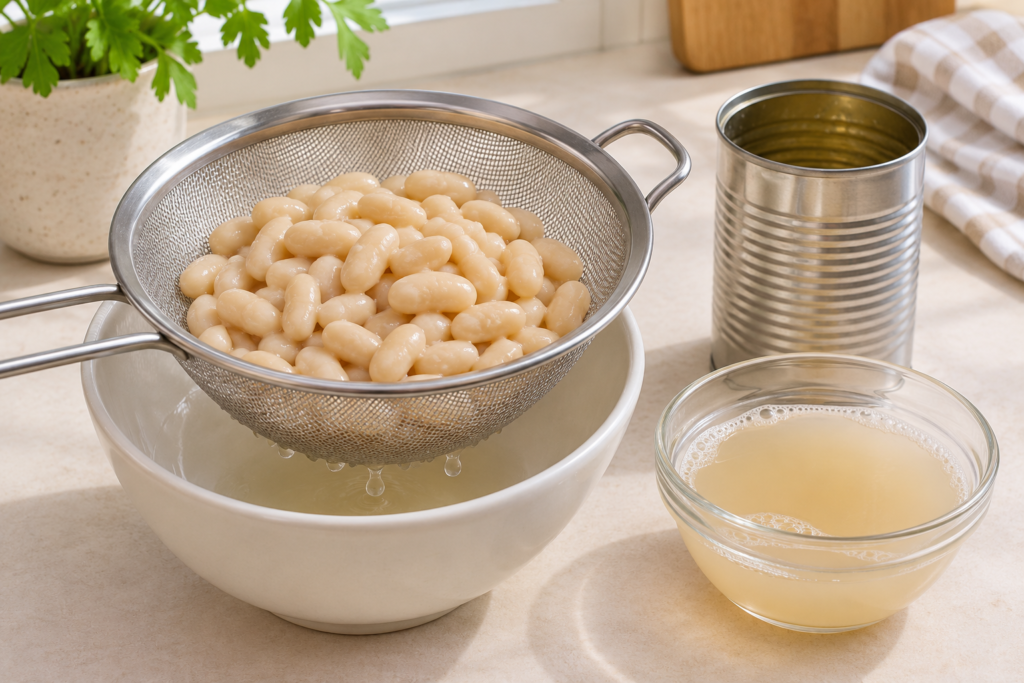
- Check the can before opening. Set a clean colander or sieve over the sink, keeping the beans away from the sink surface.
- Pour in the plain beans and let the packing liquid drain. If you plan to use the liquid, catch it in a clean bowl first.
- Run cool drinking water over the beans, moving them gently so the water reaches the whole batch. Avoid vigorous stirring that breaks soft beans.
- Let them drain, then measure or add them as your recipe directs.
Rinsing is not a fix for damaged cans or spoiled food. USDA warns against using food from leaking, bulging or badly dented cans. Do not taste suspect contents to decide whether they are safe.
Store the portion you do not use
Transfer leftovers to a clean covered container and refrigerate promptly at 40°F (4°C) or below. USDA gives opened canned beans a refrigerated storage window of 3–4 days; follow a shorter instruction on your product if provided. Label the container with the opening date, not the date you rinse it.
Observe USDA’s two-hour limit out of refrigeration, reduced to one hour above 90°F (32°C). Rinsing or putting beans into a fresh container does not restart their storage time.
Do no-salt-added beans still need rinsing?
They may not need it for your sodium goal, but you can still rinse to remove packing liquid for a salad. Check the label and choose based on texture and the recipe.
Must I throw the liquid away?
No. Keep it when your recipe benefits from it, and refrigerate any reserved portion promptly with the same opening date. Avoid leaving a bowl of liquid beside the sink while the beans go into the fridge.
Featured image: AI-generated ingredient illustration, not a photograph of a tested technique.