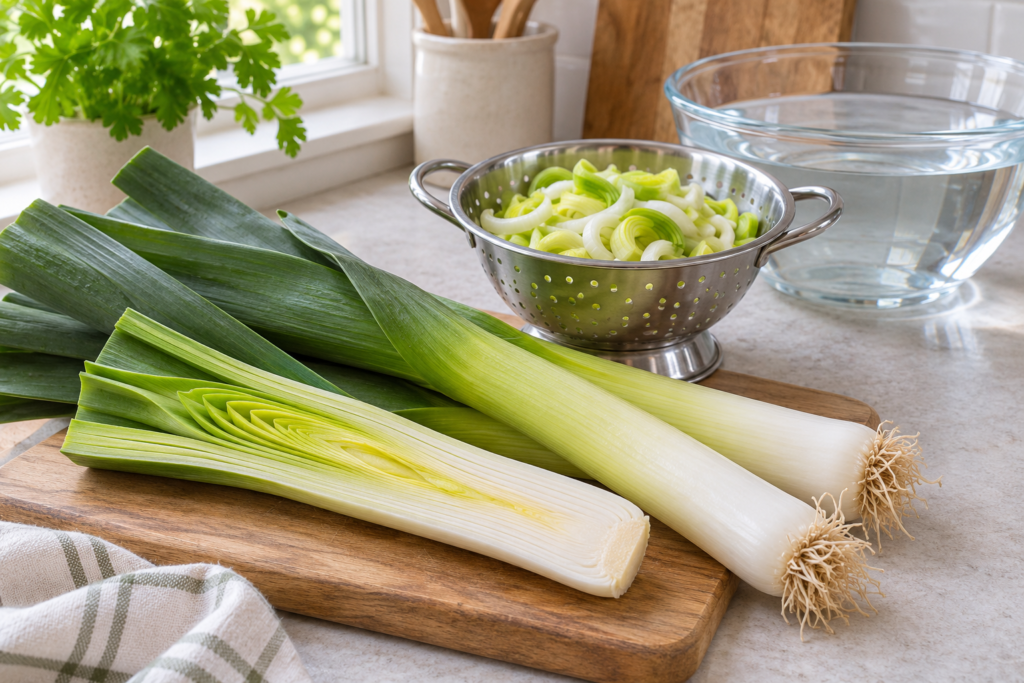
To clean leeks for soup, rinse the outside, trim them, slice the tender stalk and loosen the pieces in a bowl of cold water. Lift the leeks into a clean strainer, leaving the gritty water behind. Check the layers before they go into the pot.
That last lift matters. A leek can look tidy on the outside while holding sand between its folds. A little care at the chopping board is much easier than trying to rescue a gritty bowl of soup.
Kitchen note: this is a researched preparation guide, not a report of independent kitchen testing. Allow about 10 minutes for a couple of leeks; that is a planning estimate.
Set up before you start
Have a chopping board, sharp knife, large bowl, strainer and clean towel ready. Put the strainer beside the bowl so you can transfer the vegetables without carrying a dripping handful across the kitchen. A slotted spoon is useful for small slices.
Wash your hands and clean the work surface. FDA produce guidance recommends plain running water rather than soap or produce wash. Give the outside of each leek a rinse before cutting.
Trim and wash sliced leeks
- Trim. Remove the root end, damaged outer leaves and tough dark-green tops. Keep the white and tender pale-green stalk.
- Slice. Halve the stalk lengthwise, then place the flat sides down and cut across into half moons. Follow your soup recipe’s slice thickness rather than chopping some pieces finely and leaving others chunky.
- Separate. Put the slices into a bowl of cold water. Gently loosen nested rings with your fingers and swish them around.
- Lift. Let loosened grit settle, then lift the leeks into a clean strainer. Do not tip the water and vegetables out together.
- Check. Look between a few of the wider layers. If grit remains, empty and rinse the bowl, refill it and repeat. Drain well.
The bowl-and-lift approach follows University of Maine Cooperative Extension’s leek preparation advice. Its key warning is to leave the sediment at the bottom of the bowl.
Choose the cut your soup needs
Half moons are convenient when you want small pieces distributed through the soup. For a blended soup, perfectly matching shapes matter less than keeping the pieces a similar size so they soften together. For a chunky soup, think about what will fit comfortably on the spoon.
If your recipe calls for long halves, keep the halves intact and fan their layers under running water instead. Open each fold enough to inspect it; rinsing only the cut face leaves hidden surfaces untouched. Do not use the sliced-leek method if you need the final pieces to hold their shape.
Drain for the next cooking step
When the recipe starts by softening leeks in oil or butter, spread the drained pieces on a clean towel and pat away surface water. Transfer them gently to the pan. A bowlful of wet leeks adds liquid before you have added the stock.
If they go straight into broth, thorough draining is usually enough. Avoid squeezing them into a compact ball; the aim is to remove wash water while keeping loose, easy-to-stir pieces.
For a soup idea built around this ingredient, see cauliflower, leek and potato soup. This guide covers the cleaning stage; use your chosen recipe for quantities and cooking instructions.
Questions that come up at the sink
Can I just rinse a whole leek?
An outside rinse is a useful first step, but it cannot reach all the inner folds. Expose the layers by splitting or slicing before the final wash.
Should I throw away every green part?
No. Keep tender pale-green portions with the white stalk. Tougher dark tops can be washed separately and used to flavour stock, as Maine Extension suggests. Discard damaged or rotten material rather than saving every scrap.
Can I prepare leeks ahead?
Yes, but refrigerate the cut produce promptly in a clean covered container at 40°F (4°C) or below, following FDA storage guidance for cut produce. Dry it well first and plan to use it soon. Cleaning does not restore the quality of an old leek.
Featured image: AI-generated preparation illustration, not a photograph of a tested technique.