Yes, you can freeze leftover canned pumpkin. Measure it into portions you will actually use, pack it in freezer-safe containers or bags, and label each package with the amount and date. Thaw it in the refrigerator before baking, then stir it and check the consistency before measuring it into your recipe.
That last spoonful does not need to become another forgotten container at the back of the fridge. A few small portions are often more useful than one solid block, especially when breakfast needs a little pumpkin and a baking recipe needs a full cup.
Kitchen note: This is a researched storage guide, not an independently tested freezer experiment. Freezing and thawing times depend on portion depth, packaging and appliance temperature.
Start with plain pumpkin, not pie filling
Check the label before packing. Plain pumpkin purée and pumpkin pie filling are different ingredients: pie filling may already contain sugar and spices. Label the exact product so you do not accidentally add a sweetened mixture to a savoury dish.
This guide covers plain, commercially canned pumpkin after opening. For pumpkin cooked from fresh, follow the National Center for Home Food Preservation’s pumpkin-freezing method, which includes cooking, cooling and leaving space in the container. Do not treat a home-filled jar as the equivalent of an unopened commercial can.
Choose a portion that fits the next meal
- Tablespoon portions: useful when you only want a small addition to cooked oats or a sauce.
- Quarter- or half-cup portions: useful for recipes calling for modest amounts.
- A recipe-sized bag: sensible when you already know the exact quantity your next bake needs.
Measure the purée before freezing. Tray cavities vary; one cube is not automatically one tablespoon. If a recipe specifies grams, weigh that quantity rather than converting the can’s net weight into a guessed number of cups. Keep different portion sizes in separate, clearly marked bags.
How to freeze canned pumpkin, step by step
- Decide promptly. Freeze the extra pumpkin while it is still fresh and has been handled safely. Freezing does not rescue spoiled food or food left warm too long.
- Prepare clean packaging. Use freezer-safe bags, small freezer containers or a clean portion tray. Choose containers intended for freezing, especially if using glass.
- Measure and fill. Spoon the purée into your chosen portions. In a rigid container, leave expansion space rather than filling to the rim. The home-preservation method linked above specifies ½ inch for cooked mashed pumpkin; also follow your container’s instructions.
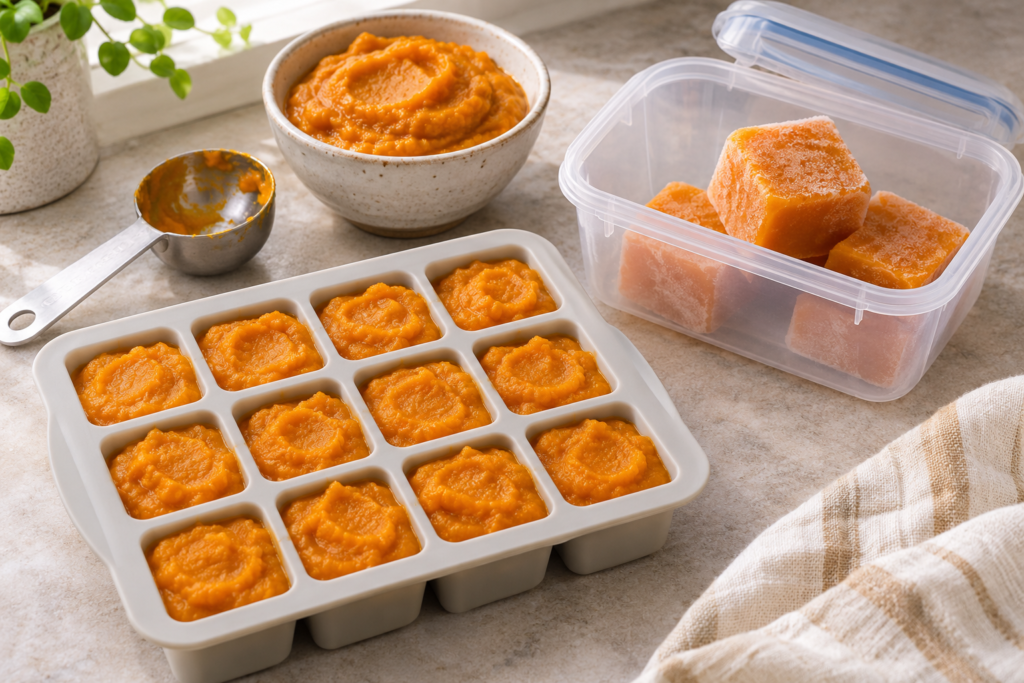
- Seal appropriately. For bags, gently press out excess air, seal, and flatten on a tray. For small moulded portions, freeze until firm, then transfer them promptly into a sealed freezer bag or container. An uncovered tray is a portioning step, not long-term packaging.
- Label and freeze. Write “plain pumpkin,” the quantity and the freezing date. Include the opening date if it was refrigerated first. Keep the freezer at 0°F (-18°C).
Allow several hours for small portions to become firm as a planning estimate; larger or deeper portions may need longer. Check that they release cleanly before trying to remove them. Do not pry a frozen block out with a sharp knife.
How long can it stay in the freezer?
Libby’s storage FAQ recommends freezing its leftover pumpkin for up to three months and describes tray portions as an option. Three months is a practical rotation target for this guide, not a claim that every brand has identical storage instructions.
Keep quality and safety separate. The FDA’s freezer guidance explains that safely handled food kept continuously at 0°F remains safe, although quality declines. Freezing does not kill most bacteria. That guidance does not excuse an unknown storage history, a warm freezer or spoiled pumpkin.
How long can opened pumpkin wait in the fridge?
For a conservative household plan, use or freeze opened pumpkin within 3–4 days at 40°F (4°C) or below, and follow any shorter instruction on the product. USDA’s opened-can guidance gives that window for low-acid canned foods.
Manufacturer advice can differ: Libby’s consumer FAQ gives a longer refrigerated period, but this guide uses the shorter general window. Rather than extending the life of an unknown product, check the actual label and freeze early. Keep perishable food out of refrigeration for no more than two hours, or one hour above 90°F (32°C), following the FDA guidance above.
Thaw gently and check for separation
Move the amount you need to a covered container in the refrigerator. University of California guidance also specifies refrigerator thawing for frozen pumpkin. Small portions may thaw overnight; a thick block can take longer. Do not leave the purée on the counter to thaw.
Stir thawed canned pumpkin first. A little separation is expected and does not by itself mean the pumpkin has spoiled. For baking, follow your recipe’s consistency instructions; do not automatically squeeze it dry or add extra water. If the recipe specifically calls for drained purée, drain it as directed and measure afterward.
A small frozen portion can also be stirred into a simmering soup or sauce, provided the dish has time to heat through evenly. For batter, thaw first so a frozen lump does not prevent even mixing. Use thawed pumpkin promptly; freezing does not erase the time it already spent in the refrigerator.
Make the portions easy to use
Keep a note of the amount left in the bag. Four measured tablespoon portions make a quarter cup; four quarter-cup portions make a cup. Those counts work only when the original portions were measured accurately.
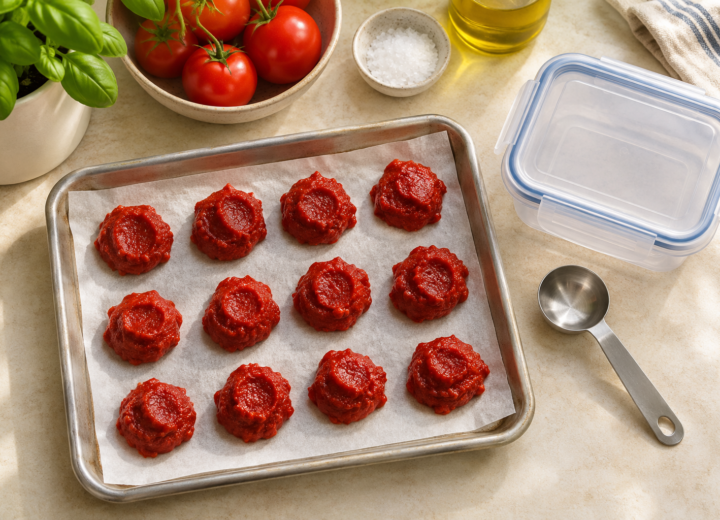
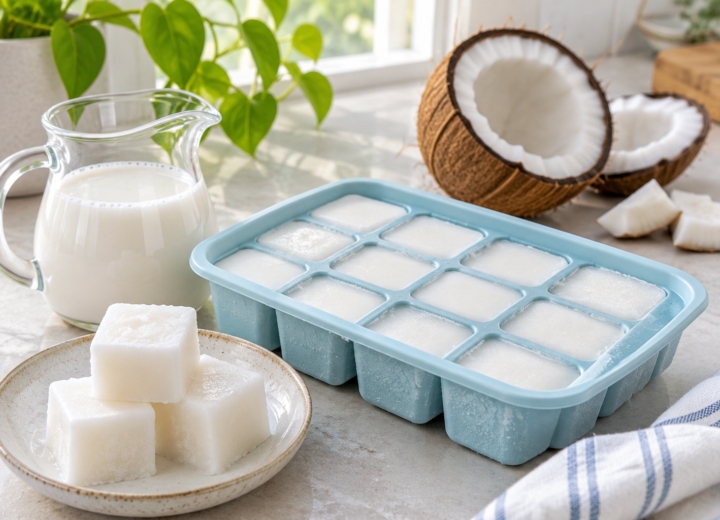
If you are organising other small leftovers at the same time, Fnbbuzz’s guides to freezing tomato paste and freezing coconut milk explain their own packing and texture considerations. Label each ingredient separately rather than assuming every orange or white cube will be obvious later.
Common questions
Can I freeze pumpkin in its opened can?
Transfer it to freezer-safe packaging for this method. You can choose a useful portion size, seal it properly and leave room for expansion.
Do I need to cook canned pumpkin first?
No extra cooking is needed just to portion and freeze plain commercially canned pumpkin. Follow the product’s label and the recipe you use it in afterward.
Can I preserve the purée in jars instead?
Freezer-safe containers are an option, but home canning puréed pumpkin is not a substitute for freezing. Illinois Extension explains why pumpkin purée is unsuitable for home canning.
Featured image: AI-generated illustration, not a process photograph.