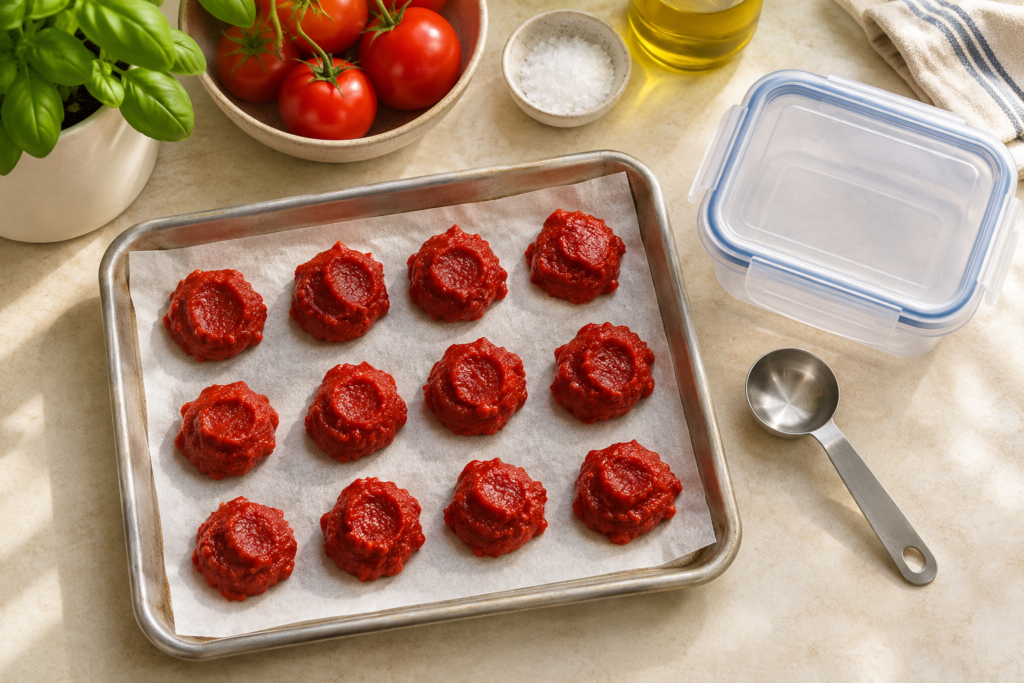
To freeze tomato paste, measure it into small portions, freeze those portions until firm, then pack them in a sealed freezer bag or container. Label the amount in each portion and the date. When a soup needs two tablespoons, you can take out just that amount.
A nearly full can is easy to forget once dinner is on the table. Portioning the extra paste while you put the ingredients away gives it a clear purpose for another meal. You do not need a special tray or a large batch.
What you need
- Freshly opened leftover tomato paste, or refrigerated paste still within its label’s storage instructions
- A measuring tablespoon or teaspoon
- A small freezer-safe tray lined with parchment, or a freezer-safe silicone portion tray
- A freezer bag or airtight freezer container
- A label and pen
Use clean utensils and containers. Start with paste that has been handled safely; freezing does not rescue food that has spoiled. Follow the product’s instructions after opening, particularly for tubes, whose storage directions can differ from cans.
How to freeze tomato paste, step by step
- Choose a portion you will use. One tablespoon suits many sauces and soups. Use teaspoon portions if you normally cook small amounts. Measure the paste rather than guessing by eye.
- Set out separate portions. Spoon level measures onto the lined tray, leaving a little space between them. Alternatively, fill a silicone tray with a measured amount in each cavity. A cavity is not automatically one tablespoon.
- Freeze until firm. Place the tray level in the freezer. Allow several hours as a planning estimate; portion depth and freezer conditions change the time. The portions should hold their shape when moved.
- Pack promptly. Lift the portions into a freezer bag or container. Remove excess air from the bag without crushing the paste, seal, and return it to the freezer.
- Label the useful details. Write “tomato paste,” the freezing date and the amount per portion. Add the brand or concentration if you use more than one type.
For example, if you measure six one-tablespoon portions, a recipe needing two tablespoons uses two portions. Do not calculate the number of tablespoons from the can’s ounce weight: weight ounces and fluid ounces are different measures, and paste density varies.
Choose the freezing method that fits your kitchen
Lined tray: useful when you want individually measured portions without buying equipment. Transfer them once firm so they are not left exposed in the freezer.
Silicone tray: useful for tidy portions. Measure what goes into each cavity and move the frozen pieces into sealed storage unless the tray itself has a suitable airtight lid.
Wrapped log: the manufacturer Contadina describes freezing paste as a wrapped log. This saves tray space, but measured portions are easier if you want to avoid cutting a frozen block. Never force a knife through paste that is too hard to cut safely.
How long can tomato paste stay in the freezer?
For a straightforward rotation target, aim to use it within about two months. Contadina gives a two-month freezer window in its leftover-paste tip. Treat that as a quality target, not a point at which properly frozen paste automatically becomes unsafe.
The FDA’s freezer guidance distinguishes quality loss from safety: correctly handled food kept continuously at 0°F (-18°C) remains safe, although its flavour and texture can deteriorate. Freezing does not kill most bacteria. Keep the bag well sealed and use an appliance thermometer to check the freezer temperature.
That guidance does not apply to paste that was unsafe before freezing or warmed during a freezer failure. If the storage history is uncertain, do not taste it to decide whether it is safe.
How to use frozen tomato paste
In a simmering soup or sauce: add a measured frozen portion and stir as it softens. Give it time to disperse fully before judging the sauce’s thickness.
When the recipe asks you to cook the paste in oil first: thaw the needed portion in a covered container in the refrigerator. It will spread more readily across the pan. Avoid dropping an icy portion into very hot oil, which can splatter. Follow the recipe’s heat level and stir so the paste does not scorch.
Fnbbuzz’s lentil and sweet potato soup uses two tablespoons of tomato paste. Two labelled portions make that ingredient easy to measure; thaw them first for the recipe’s paste-cooking step.
If you are organising other small freezer portions, the guide to freezing fresh ginger covers a separate ingredient that also works well in everyday cooking.
When portions stick together
If the paste smears when you lift it, leave it in the freezer until it holds its shape. If frozen portions touch and join, avoid levering them apart with a sharp knife. Next time, leave more space on the tray and pack them only after they are firm.
Use separate small containers if a shared freezer bag makes portioning awkward. The useful measurement is what you put into each container before freezing, not the size of the frozen lump afterwards.
Common questions
Can I freeze tomato paste from a tube?
You can portion plain tomato paste from a tube into freezer-safe storage. Check the label first: you may prefer to refrigerate the tube if you will use it within the manufacturer’s stated period. Do not assume all brands allow the same storage time.
Does freezing change double-concentrated paste?
It does not turn it into standard tomato paste. Label the concentration and follow your recipe or product guidance when deciding how much to use.
Do I need to add oil or water?
No added liquid is needed for these portions. Keeping the paste plain preserves a known quantity and lets you choose the oil and liquid when cooking.
Can I leave the paste in its opened can?
For this method, transfer it into measured portions and sealed freezer packaging. It is easier to remove, label and use than a single frozen mass in an opened can.
Featured image: AI-generated illustration, not a process photograph.