10-Minute Tuna Sashimi Recipe: Restaurant-style at Home
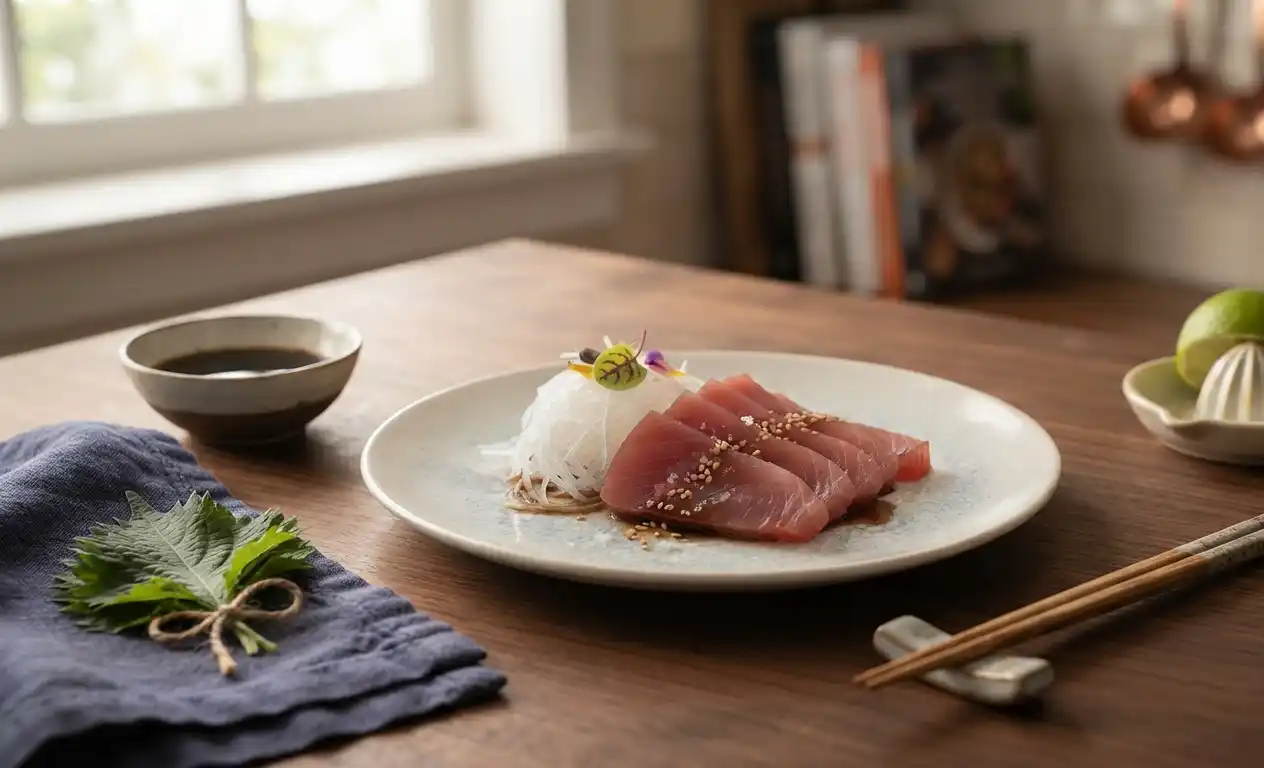
Table of Contents
Sometimes, when you are too busy, you are hoping for an easy, simple recipe that will make you healthy, happy, and full. That is why the 10-minute Tuna Sashimi recipe is grabbing all the attention whenever you are home. This simple, easy, healthy, and tasty recipe will help you find the best taste in your city. With a handful of items and effort, you can make an authentic Japanese Tuna Sashimi recipe at home! Let’s jump into the steps to learn it quickly.
Quick Recipe Structure
| Recipe | Tuna Sashimi |
| Prep time | 10 minutes |
| Serving | 2-3 |
| Cuisine | Japan |
| Difficulties | easy |
| Calories | 240 kcal |
The Premium Tuna Sashimi Recipe
This premium but easy-to-make recipe is a blend of a handful of top ingredients. Let’s arrange them to create the authentic Tuna Sashimi plate.
Essential ingredients
- 225g sashimi-grade tuna fish
- 2 tbsp soy sauce
- 1 tbsp fresh lime juice
- 1tsp Mirin
- 1 tsp toasted sesame oil
- Ginger pickled, shredded daikon radish, and toasted sesame seeds.
Equipment to carry
- Measurement spoon
- Bowl
- Plate
- wisker
The preparation of the recipe
Step 1: Chill the fish and knife
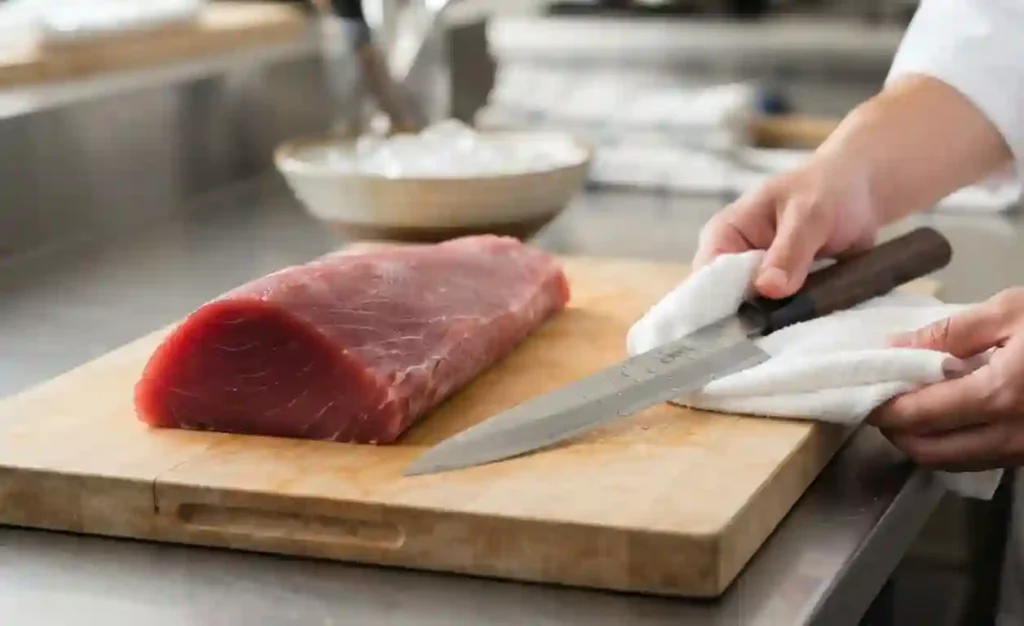
For the very first step, chill your Tuna loin for 10 to 15 minutes before slicing it, but do not freeze it. On the other hand, keep your sharp knife under cold water and dry it while cutting the Tuna. It will help you to cut the slices evenly.
Step 2: Slice the tuna
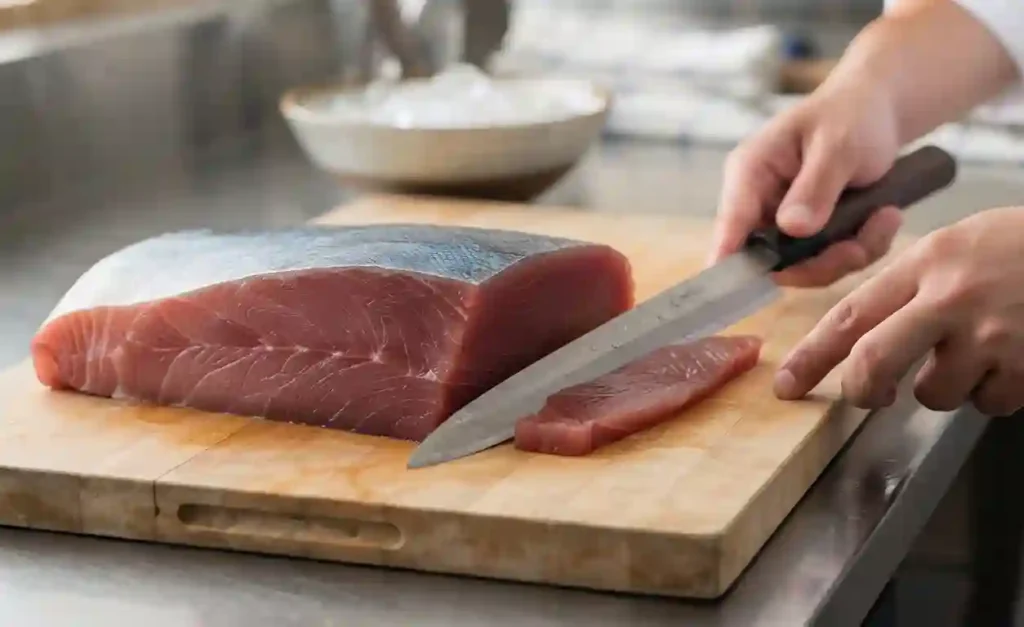
Identify the grain of the fish. Place your knife at the far end of the loin and slice against the grain at a slight angle, pulling the blade toward you in one single, fluid motion. Avoid sawing. Aim for slices about 1/4-inch (0.6 cm) thick.
Step 3: Whisk the citrus glaze
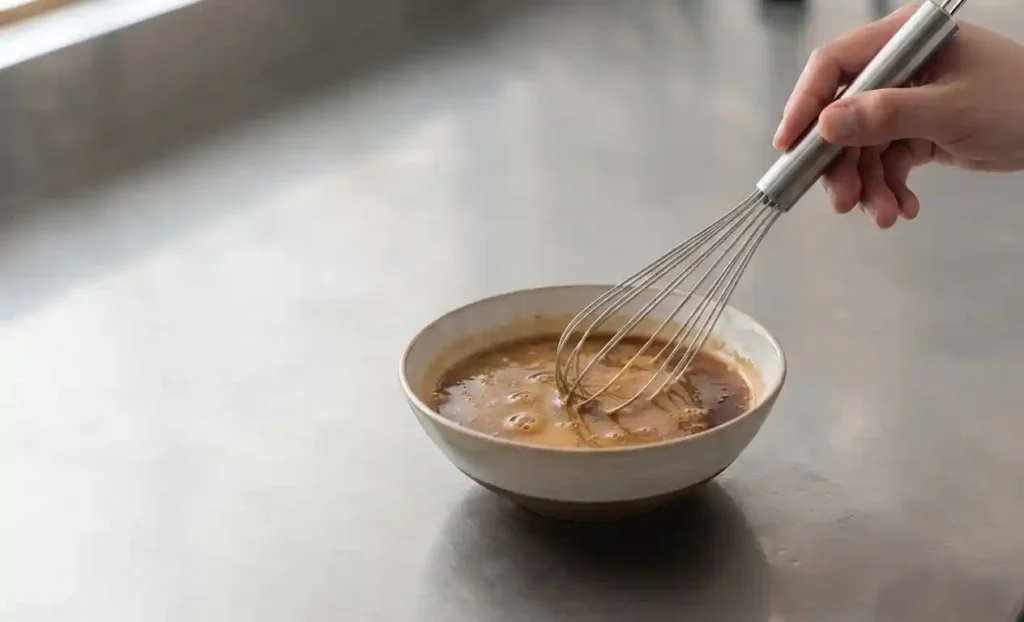
Take a small bowl and put some soya sauce, fresh lime juice, mirin, and toasted sesame oil, and whisk it with a whisker till it is beautifully emulsified.
Step 4: Plate and garnish
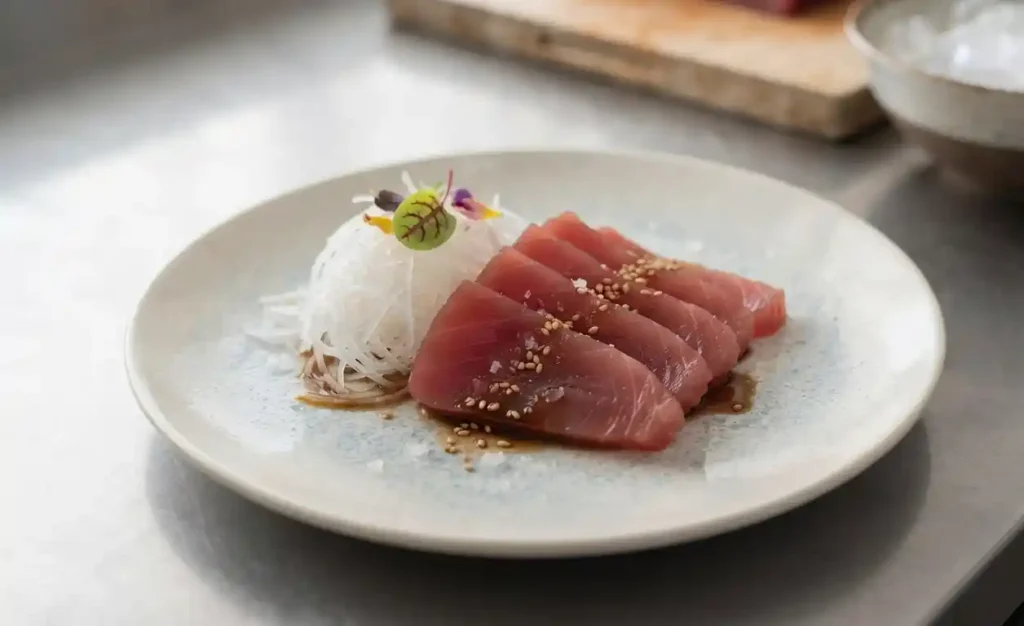
It’s time to plate the delicious Tuna. Take a cold plate and arrange a small amount of shredded daikon radish to make the base. Now fan the tuna slices gently beside the radish. Drizzle the prepared glaze gently over the fish and enjoy the Tuna Sashimi.
Serving suggestion
- To enhance the taste of the dish, you can have the fish along with wasabi and pickled ginger.
- This recipe is also good with shiso leaves, which enhances its freshness
- Try some pickled cucumber salad along with this Tuna Sashimi recipe
- To add some crunchiness, you can add some English cucumber along with it
- You can also use ponzu sauce or jalapeno to make it spicy
Storage and easy tips
Tuna sashimi is delicate and best way to cobnsumed it at the day of buying. But if you want to store it overnight, then some golden rules you have to follow.
- Dry the fish completely using a paper towel, as moisture is a big enemy
- Wrap the fish tightly so that no air pockets get trapped
- It can be stored for up to 24 hours
Nutrients breakdown
| Calories | 240kcal |
| Protein | 55.0g |
| Total Fat | 1.1g |
| Total carbohydrates | 0.0g |
| Sodium | 85mg |
Types Of Tuna To Use In Recipe
When you are making this recipe, one thing you should know is which Tuna is best for the recipe and why. There are two common types of tuna, bluefin and yellowfin, available in the market.
Bluefin(Hong-Maguro): This Tuna is known as the King of Sushi. It is incredibly rich, heavily marbled with fat, and melts in your mouth. Because it’s so prized, it is also the most expensive.
Best for: Traditional, minimalist sashimi where the fish is the absolute star, served only with high-quality soy sauce and freshly grated real wasabi.
Yellowfin (Ahi): Rich with a dark red colour and slightly firmer, meatier texture. Compared to the Blufin This tuna has a fresh and clear flavour.
Best for: Sashimi salads, Hawaiian poke, or dishes where the tuna is paired with stronger flavors (like a ponzu sauce, jalapeño, or sesame oil), as it won’t be easily overpowered.
Major blunders to avoid
- Buying fish that is not flash-frozen
- Using a dull knife
- Sawing back and forth across the loin creates jagged,
- Cutting parallel to the grain
- Trying to slice tuna at room temperature.
Conclusion
Making a spectacular tuna sashimi recipe at home is honestly all about respecting your ingredients and not rushing. If you focus on trusted, sushi-grade fish and do those clean one-stroke cuts, you get a delicate texture and a crisp flavor profile that kind of competes with any luxury sushi bar. It is a funny kind of reminder that the best dishes, often need the least fussing. Once you learn the base slicing technique, then you can start playing around—like adding tiny microgreens, a small pour of truffle oil or even a thin sliver of fresh jalapeño, and suddenly it feels entirely customized.
FAQs
Q1.What exactly does “sushi-grade” or “sashimi-grade” mean?
Surprisingly, “sushi-grade” is not an official government or USDA grading system. Instead, it is a marketing term used by fishmongers to indicate that the fish is high-quality, fresh, and has been commercially flash-frozen.
Q2: Can I use regular frozen tuna steaks from the supermarket?
No, you need to choose a standard fresh tuna for the recipe.
Q3.What is the difference between Tuna Sashimi and Tuna Sushi?
The distinction comes down to the rice. Sashimi refers strictly to thinly sliced pieces of fresh, raw meat or seafood served completely on its own. Sushi always involves seasoned, vinegared sushi rice
Q4. Can I save leftover tuna sashimi by cooking it?
Yes, if the tuna becomes dull and airy dont consume it raw. Better to cook and enjoy it.
Q5.How thick should sashimi slices be?
The gold standard for traditional tuna sashimi (Hira-zukuri or rectangular slice) is roughly 1/4-inch to 1/3-inch thick (about 6mm to 8mm).

Related Posts