
Creamy Roasted Root Vegetable Soup With Simple Ingredients

Table of Contents
There’s something deeply satisfying about a bowl of bold roasted root vegetable soup—wait, scratch that—Roasted Root Vegetable Soup. Roasting concentrates the vegetables’ natural sugars and adds caramelized depth that simmering alone can’t match. When you blend those roasted roots with a simple broth and a splash of cream or coconut milk, you get a silky, warming bowl that tastes like comfort, health, and home all at once. This recipe keeps ingredients simple, techniques friendly, and flavor big—perfect for weeknights or when you want an impressive but easy dish.
Ingredients
Below are ingredients for a crowd-pleasing pot that serves 4–6. Adjust quantities as needed.
Root Vegetables (Base Flavors)
- 3 medium carrots, peeled and chopped
- 2 medium parsnips, peeled and chopped (or swap with celeriac)
- 2 medium sweet potatoes or 1 large, peeled and cubed
- 1 medium red or yellow onion, quartered
- 2 medium beets (optional — adds color and earthiness)
Aromatics, Liquids, and Fat
- 4 cups vegetable or chicken broth (use low-sodium if possible)
- 3 tablespoons olive oil or melted butter
- 4 garlic cloves, smashed
- 1 teaspoon sea salt (plus more to taste)
- ½ teaspoon black pepper
- 1 teaspoon fresh thyme leaves or ½ teaspoon dried thyme
- ½ cup heavy cream, whole milk, or full-fat coconut milk (for dairy-free)
Optional Garnishes and Add-ins
- Toasted pumpkin seeds, sour cream, or crème fraîche
- A drizzle of good olive oil or chili oil
- Fresh parsley or chives, finely chopped
- Croutons or crusty bread on the side
- A squeeze of lemon for brightness
Tools & Equipment
- Baking sheet (large)
- Large pot or Dutch oven
- Immersion blender or countertop blender
- Sharp knife and cutting board
- Spoon for stirring and ladling
Step-by-Step Recipe
Preparing and Roasting the Vegetables
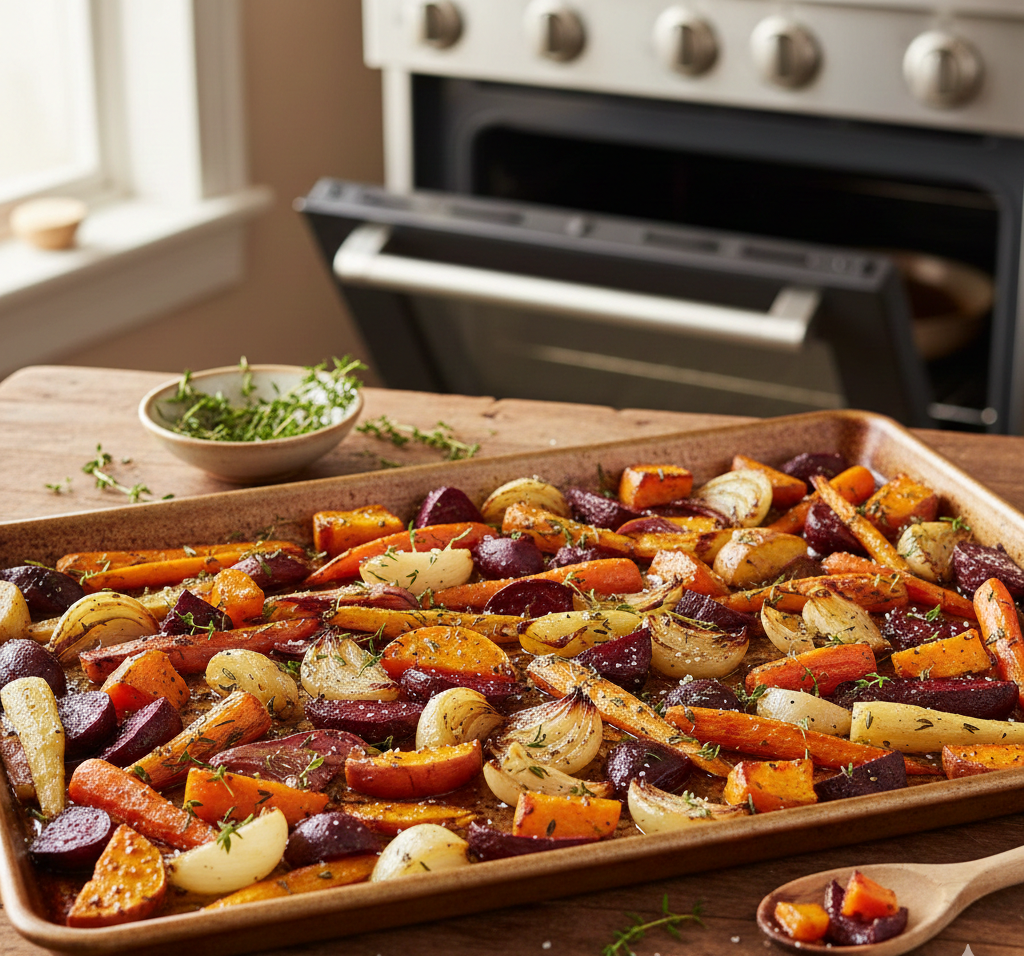
Preheat your oven to 425°F (220°C). Toss the chopped carrots, parsnips, sweet potatoes, beets (if using), and onion with olive oil, ¾ teaspoon salt, ¼ teaspoon pepper, and thyme on a large baking sheet. Spread into a single layer—crowding causes steaming, not roasting. Roast for 30–40 minutes, turning once, until edges are deeply caramelized and centers are fork-tender. The roasted bits are where most of the flavor lives; don’t shy from golden-brown edges.
Sautéing Aromatics & Building Flavor

While the vegetables roast, warm a large pot over medium heat with a tablespoon of oil or butter. Add smashed garlic and sauté just until fragrant—about 30 seconds—so it doesn’t burn. If you like, you can sweat a diced shallot here for extra sweetness. Once the veggies are out of the oven, transfer them to the pot and stir to mix with the garlic.
Simmering and Blending to Creaminess

Add the broth to the pot so it just covers the vegetables. Bring to a gentle simmer for 10 minutes to marry flavors. Turn off the heat and let cool slightly (a few minutes). Using an immersion blender, puree until silky and smooth. If using a countertop blender, work in batches and be careful with hot liquids. For an ultra-creamy texture, stir in ½ cup heavy cream or coconut milk after blending, reheat gently—do not boil.
Adjusting Seasoning and Texture

Taste and adjust salt and pepper. If the soup is too thick, add more broth or water, one quarter-cup at a time. If it feels flat, a teaspoon of lemon juice or apple cider vinegar brightens it instantly. For a richer finish, swirl in an extra tablespoon of butter or a drizzle of olive oil.
How to Make It Vegan or Dairy-Free
Swap heavy cream for full-fat coconut milk or cashew cream. Use vegetable broth instead of chicken broth. For a nutty cream without coconut flavor, blend ½ cup soaked raw cashews with ½ cup hot water and stir into the soup—strain if you want an ultra-smooth finish.
Variations to Try
Spiced / Curried Version
Add 1 tablespoon curry powder when sautéing garlic, or toss roasted vegetables with ground cumin, coriander, and a pinch of smoked paprika before roasting. Finish with a swirl of yogurt or coconut milk and chopped cilantro.
Cheesy Comfort Version
Stir in ½ cup grated sharp cheddar after blending and melt gently on low heat for an indulgent, kid-friendly bowl. Top with crispy bacon if not vegetarian.
Herby Bright Version
Before blending, add a large handful of fresh parsley or basil to the pot. Finish with lemon zest and more herbs for a fresher profile that lifts the natural sweetness of the roots.
Serving Suggestions & Pairings
Serve the soup hot with crunchy accompaniments: garlic croutons, seeded crackers, or a slice of crusty sourdough. A simple salad (arugula with lemon vinaigrette) cuts through the soup’s richness. Pair with white wine like a Chardonnay or a dry rose for cozy dinners.
Nutrition & Health Benefits
This Roasted Root Vegetable Soup is packed with vitamins and fiber. Carrots and sweet potatoes deliver vitamin A and beta-carotene; parsnips offer fiber and potassium. Roasting keeps nutrients intact while improving taste, which helps you eat more vegetables without feeling deprived. Using broth and moderate oil keeps it relatively light; choosing coconut milk or cashew cream still gives richness with plant-based fats.
Storage, Reheating & Freezing Tips
Cool the soup completely before storing. In the fridge, it keeps 3–4 days in an airtight container. Reheat gently on the stove over low heat—if it’s thick, add broth to loosen. To freeze, portion into freezer-safe containers (leave headroom) and freeze up to 3 months. Thaw in the fridge overnight and reheat slowly. Fresh garnishes like herbs are best added at serving time.
Common Problems
- Soup tastes bland: Add a splash of acid (lemon juice or vinegar) and more salt. A small pinch of sugar can revive roasted-beet-forward bowls.
- Too thin: Reduce by simmering uncovered a few minutes, or blend in a half-cup more roasted veggies.
- Too thick: Stir in warm broth or milk 2–4 tablespoons at a time.
- Grainy texture: Overcooked starchy roots sometimes grain. Blend longer, pass through a fine sieve, or add a fat like butter to smooth it out.
Final Thoughts
This Creamy Roasted Root Vegetable Soup With Simple Ingredients is proof that humble vegetables can become something luxurious with a little heat and love. It’s forgiving, adaptable, nutrient-dense, and perfect for seasonal cooking. Whether you’re feeding a crowd or packing lunches, this soup shines—warm, creamy, and full of caramelized sweet-and-savory depth. Make a big pot. Eat some now. Save the rest for days when you need a hug in a bowl.
Frequently Asked Questions
Q1: Can I roast the vegetables ahead of time?
Yes. Roast them up to 24 hours ahead and refrigerate. Reheat briefly before blending to help the flavors come back.
Q2: Is this recipe gluten-free?
Yes—provided you use gluten-free broth and serve with gluten-free bread or crackers.
Q3: Can I use canned pumpkin or squash instead of fresh roots?
You can, but flavor and texture differ. Canned pumpkin blends easily and is great for a pumpkin-parsnip twist; adjust seasonings because pumpkin is less sweet than roasted sweet potato.
Q4: How can I make the soup more filling?
Stir in cooked lentils, white beans, or top with toasted quinoa and seeds for extra protein and texture.
Q5: Will the color change when I use beets?
Yes—beets will make the soup a rosy/purple hue. If color matters, roast beets separately and combine a small portion with other roots to control intensity.

Related Posts

Simple & Wholesome Tomato Zucchini Soup – made in minutes

Homemade Cauliflower Leek and Potato Soup Without Cream

Best Carrot and Parsnip Soup Recipe for Weight-Loss Meals