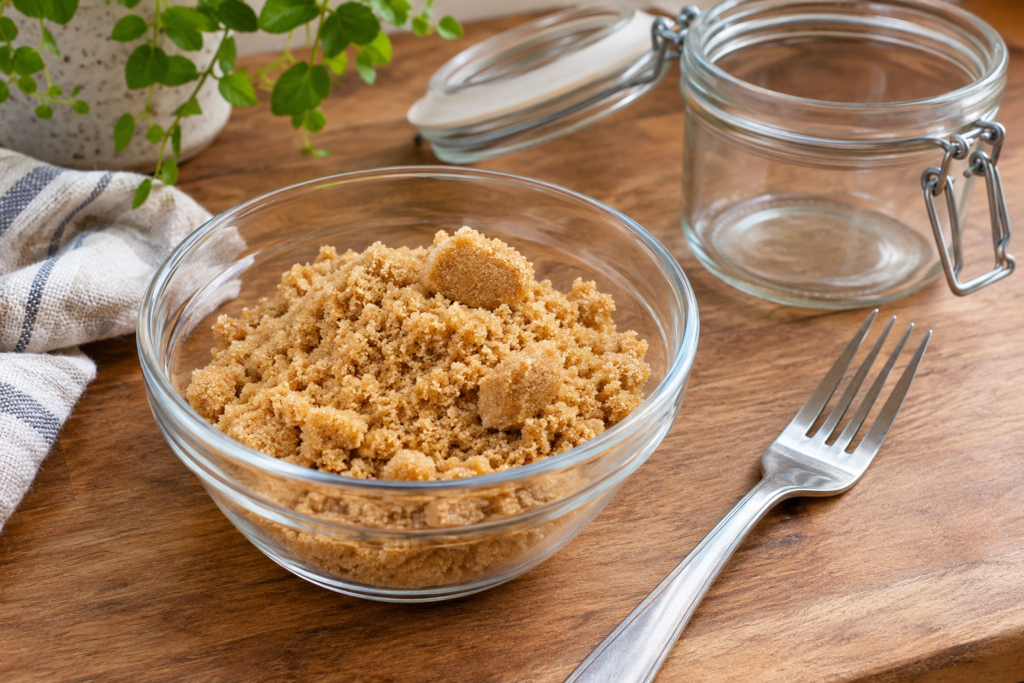
To soften brown sugar for baking, use a microwave-safe bowl and a damp paper towel, checking at short intervals until the clumps yield to a fork. If you have time, a sealed container with a separate moisture source offers a slower option. Stop at soft granules: you do not want a pool of melted sugar.
A hard lump is inconvenient when the mixing bowl is already out. Before choosing a fix, check how soon you need the sugar and whether the recipe will be sensitive to warm ingredients.
Kitchen note: this is a researched technique guide, not a report of independent kitchen testing. Softening times vary with the amount, hardness and equipment.
Choose a method before you start
- Baking now: use the microwave method below, working only with the amount you need.
- Baking in a day or two: use the sealed-container method and check the texture before measuring.
- Preventing the next hard lump: close the storage container tightly after every use.
Brown sugar hardens as it loses moisture. King Arthur Baking explains how moisture loss makes the crystals stick together. That is why crushing a block into smaller chunks is not the same as restoring its soft texture.
Microwave method: check, loosen, then stop
- Put the sugar you need in a microwave-safe bowl. Remove all packaging.
- Loosely cover it with a plain white paper towel that is damp, not dripping.
- Microwave on high, checking every 30 seconds. Handle the bowl carefully: both bowl and sugar may be hot.
- Use a fork to check whether the clumps loosen. Stop as soon as the sugar is workable; do not wait for it to look wet or glossy.
- Measure promptly, because heated sugar can harden again as it cools.
This follows the short-check approach in Domino Sugar’s baking FAQs. There is no single total microwave time that suits every bowl. Keep the fork out of the microwave between checks.
A slower method without bread
Place the hard sugar in a tightly closing container. Set a small piece of foil or plastic wrap on top, then put a damp, non-dripping white paper towel on that barrier. Seal the container. Domino estimates about two days for the sugar to soften. Remove both the towel and barrier once it is soft, then reseal. This foil setup is for room-temperature storage only; never microwave it.
The barrier matters: the aim is gradual moisture transfer, not a wet patch where a towel touches the sugar. If you need the ingredient tonight, this is not the method to start an hour before baking.
What about bread or a sugar-saving disk?
King Arthur also describes placing a slice of sandwich bread with the sugar in an airtight container for about 24 hours, then removing and discarding the bread. A purpose-made terracotta brown-sugar saver is another option; follow its soaking and drying instructions before use. Use a food-contact product, not a piece of garden pottery.
If you do not want bread in contact with your baking ingredients, choose the towel-and-barrier method. Keep the chosen method simple rather than combining bread, water and heat in one attempt.
Check the texture before measuring
Press a small amount with a spoon. It should gather together and then break apart, without hard pieces hiding underneath. Break up the whole portion you plan to measure; scooping around the remaining lumps gives an uneven ingredient.
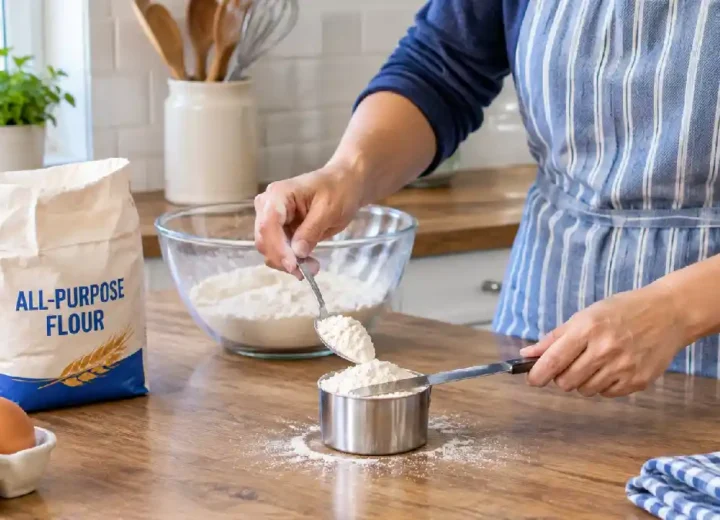
Follow the recipe’s instruction for packed, lightly packed or weighed sugar. Do not treat a cup filled with large chunks as a properly measured cup. Flour has a different measuring routine: Fnbbuzz’s flour-measuring guide explains the spoon-and-level approach.
If your recipe calls for creaming butter and sugar, avoid adding sugar while it is hot enough to soften the butter beyond the recipe’s intended texture. Measure the workable sugar, then let that portion reach the temperature the recipe requires before combining.
If the result is still wrong
Hard again before you finished: soften smaller portions nearer the moment you need them. Have the measuring tools and mixing bowl ready first.
Liquid at the bottom: stop heating. Melted or waterlogged sugar no longer behaves like the packed granular ingredient your recipe may expect. For a texture-sensitive bake, use another properly measured portion rather than guessing how much extra flour will compensate.
Only the outside feels soft: check the centre with the fork before measuring. Do not force a sharp knife into a hard block.
Keep the next batch scoopable
Transfer opened sugar to an airtight container or a heavy resealable bag and close it fully. King Arthur recommends pressing excess air out of the bag. A loosely folded packet leaves the same drying problem waiting for your next bake.
For smaller ingredient measures, keep Fnbbuzz’s teaspoon and tablespoon guide nearby. Softening fixes texture; careful measuring still matters afterwards.
Featured image: AI-generated ingredient illustration, not a photograph of a tested technique.